
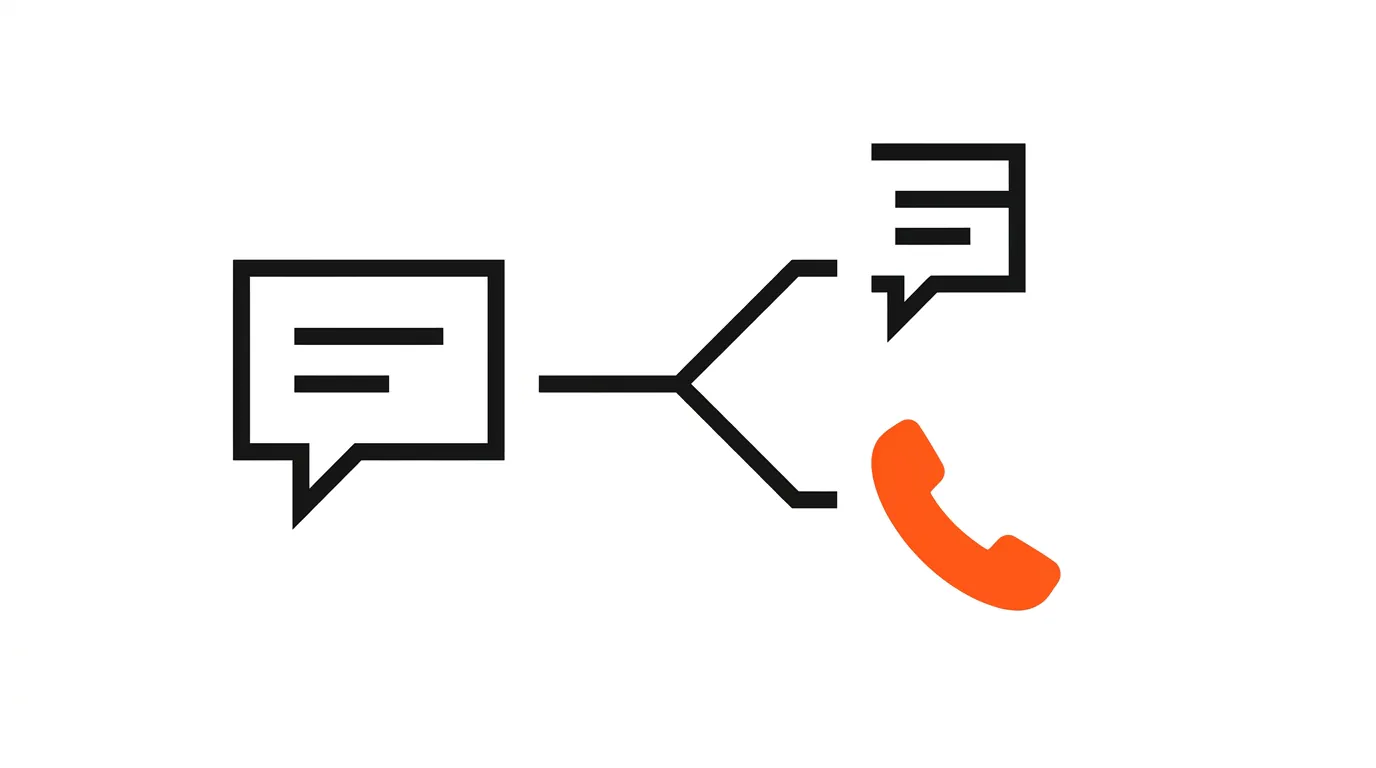
Text first, then call. A text is the fastest way to start a conversation without putting a new lead on the spot. It gets read almost every time, it's easy to answer in a couple of seconds, and it doesn't ask a stranger to pick up the phone for a number they don't recognize. The call earns its keep a step later, once they've replied and you can tell they're actually interested. That's when a quick conversation answers the real questions and books the job faster than any thread of messages. So the order is what matters: open with a text, dial once they're warm.
Most owners run it the other way around. A form comes in or a call gets missed, they dial back, hit voicemail, leave a message nobody plays, and quietly file the lead under "tire-kicker." The lead was rarely cold. The channel was just wrong for a first touch. Below is what the data says about text versus call, the exact words your opening message should carry, and the piece almost nobody plans for: the leads that show up at 9pm on a Sunday with no one around to send anything at all.
Why does a text win the first touch?
A text gets read and a cold call gets ignored. Someone who just hit "send" on your form is watching their phone, so your message lands in seconds and they answer it standing in line. A call to a number they don't recognize goes to voicemail, and most of those voicemails never get played. Same person, same moment, two very different odds of a reply.
Text messages see roughly 98% open and 45% response rates, versus about 20% open and 6% response for email. A text from a business you just reached out to gets read almost every time, and is easy to answer right away.
Email is even weaker than a cold call for a first touch, because it drops into a crowded inbox and waits there. A text lands in a thread the lead is actively watching, since they hit "send" on your form a minute ago. It reaches someone in seconds, on their terms, without demanding they stop what they're doing to talk. That's why it should almost always be your opener.
None of this means calling is dead. Calling has a clear job, and that job comes second. The minute a lead texts back "yeah, this week works" or "what would something like that run?" you've got a live, interested person on the line, and a two-minute call now moves things further than ten more messages would. The channel that gets you a reply and the channel that gets you a booking are simply not the same one.
Does the channel matter more than how fast you reply?
Speed matters more. The first business to respond usually wins, whichever channel it uses, because intent peaks the second someone reaches out and that person almost certainly messaged two or three competitors in the same sitting. A polished call two hours later loses to a plain text in two minutes. (We break the timing down in how fast you should respond to a new lead.)
So the opener has to be automatic. You can't hand-dial a five-minute response every time you're under a sink or up a ladder. A system fires that first text the instant a lead comes in, before the window closes, and beats most of the field on speed alone. Picking the right channel is the easy half. Getting it out fast, every time, is the half that actually moves the number.
What should the first text to a new lead say?
A good first text does four things and stops: it uses their name, says who you are, names what they asked about, and ends on one easy question. Short and human. No price list, no "please complete the attached form," no wall of text. You're opening a conversation, not closing the sale in a single message.
Here's the shape of it:
Walk through why it lands. The name makes it personal. "It's Mike from Ridgeline" tells them exactly who's texting, so it doesn't read as spam. Naming the water heater proves a real person saw the request instead of a bot blasting a template. The closing question is a soft yes/no they can answer with one thumb while standing in line, which is the entire point. You want a reply, and the lowest-friction way to get one is a question that takes two seconds.
A few things reliably kill a first text: leading with a price, asking for a second form, three dense paragraphs, or something so canned ("Thanks for your inquiry, a representative will be in touch") that it's obviously a robot. Here's the part owners underrate. That message can be fully automated and still read like a person wrote it, as long as it's built around the lead's real name and request. Automation and a human touch aren't at odds when the system is designed right. (More on getting the words right in the follow-up cadence that books jobs.)
When should you pick up the phone?
Call the moment a lead shows they're engaged. A reply, a question about timing or price, a "yeah let's do it": that's the green light. Now the speed and depth of a live conversation work for you, because they already know who you are and they're half-expecting to hear your voice.
A few cases where you reach for the phone sooner than the default:
- They asked you to call. If the form says "best way to reach me: phone," honor it. Still send a quick text first, though, so your number is saved and the call isn't a cold unknown.
- It's urgent. A burst pipe, a lockout, a no-heat call in January: for true emergencies, ring immediately. Speed is the whole service.
- The job's clearly big. Once it's plainly a real, sizeable job, a call moves it forward faster than a dozen texts could.
One principle holds all of it together: match the channel to the moment. Text to start, because it's frictionless and gets read. Call to advance, because it's high-bandwidth and personal. Run it in that order and you're meeting people the way they actually want to be met, since most folks, given the choice, would rather text a business they don't know yet than answer a call from one.
One note from doing this for real: which channel we open with isn't a guess, it's a decision we make per client when we build the system, then watch and adjust. On one build, switching the opener from an auto-dial to an instant text reliably lifts how many leads reply on that first touch: same leads, same speed, just a channel that doesn't ask a stranger to talk before they're ready. That single swap is one of the most reliable wins we see.
How do you handle leads that come in after hours?
Automate the first touch so it never waits on someone being awake. A large share of inquiries never arrive during business hours: they come in over dinner, on weekends, mid-job, late at night when someone finally sits down to compare their options. By the time the form turns up in your inbox on Monday, they've already booked whoever replied on Saturday night.
You can't send the first text if you're asleep, and you can't call once they're warm if the message sat unseen for fourteen hours. The "text first, then call" advice only holds if that opener doesn't depend on a person being awake and free at the exact moment the lead shows up, which, for after-hours demand, almost never lines up.
So you hand that window to a system instead:
- Instant auto-text on every new lead. A form comes in at 9pm on a holiday and an automatic text goes out in seconds, in your voice, with their name and request woven in. The conversation starts whether you're awake or not.
- Missed-call text-back on every unanswered call. A call rings out and a text fires right behind it: "Sorry we missed you, what can we help with?" The lead answers by text instead of tapping back to the search results and dialing the next name.
Then the calling happens on your schedule. You wake up to a thread that's already warm: the lead got a real reply at 9pm, told you what they needed, and is waiting to hear back. You ring them in the morning into a conversation that's already moving, instead of cold-dialing someone long gone. The system covers the hours you can't, and the channel order still holds while you're off the clock.
Put the order on autopilot
Treat "text first, then call" as a sequence you build once and let run, rather than a habit to white-knuckle through a busy week. The businesses that win the first response aren't more disciplined than you. They took themselves out of the critical path so the opener never waits on them:
- Every lead gets an instant, human text. One automatic first message across every form and channel, merged with the lead's name and what they asked about, out the door in under a minute, day or night.
- Every missed call gets a text-back. No call dead-ends in voicemail; each one becomes a live text thread instead.
- You step in to call once they're engaged. The system opens the conversation and keeps it warm; you bring the human touch at the exact point it converts.
It's the same pattern behind every lead that doesn't slip away, and it's an operations problem, not a marketing one. Getting the channel and the timing right on every single lead, automatically, is what separates a steady stream of booked jobs from a voicemail box full of people who already hired someone else. It's one piece of the larger system that keeps service businesses from losing leads in the first place.
Text first, call second, and build it so neither one waits on you being free the moment a lead shows up. Get that right and you stop weighing whether to text or call at all. The system already chose, in the right order, in seconds, while you were on a job.
The lead response system that makes this automatic is part of what we build on our AI Automation page. And if your website isn't generating the leads in the first place, see how we build the conversion foundation on Booking Systems.