
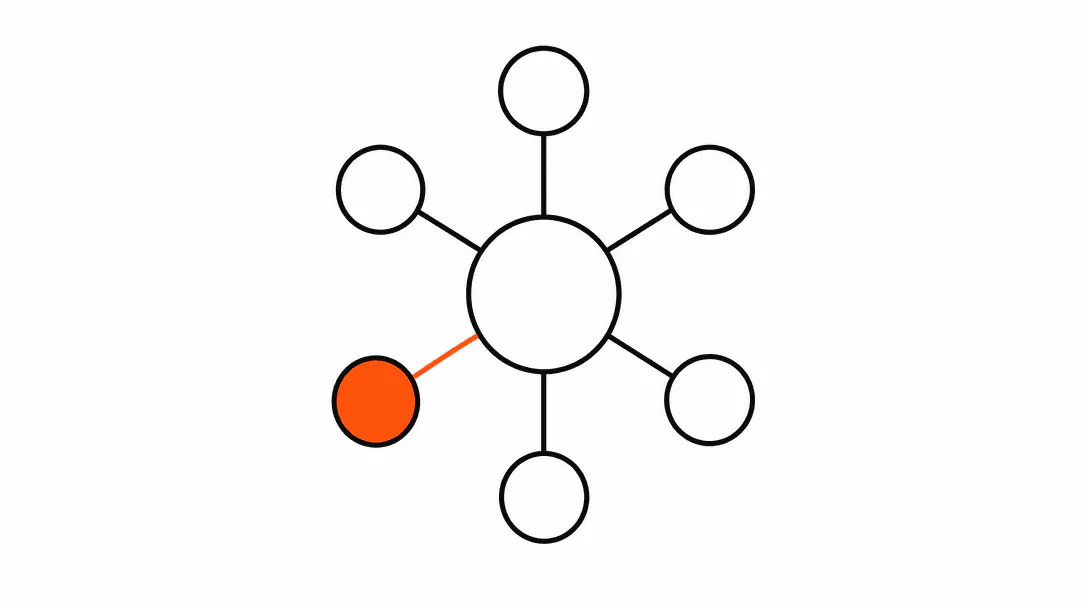
A content cluster is not a blogging strategy. It is a topical authority system: a deliberate arrangement of related posts, organized around one subject, connected by internal links, so that Google can map your expertise rather than guess at it. For service businesses competing against national directories and aggregator sites, a well-built cluster is one of the few structural advantages a local site can hold. It's a core part of how we approach local SEO and visibility for Treasure Coast service businesses.
Most service business blogs are not organized this way. They are collections of individual posts, each chasing a different keyword, none reinforcing the others. That pattern produces a site with a lot of posts and very little authority on any single topic. This guide covers how to fix that structure from the ground up, and how we build clusters for clients so that the architecture actually translates to rankings.
What exactly is a content cluster?
A content cluster is a hub-and-spoke structure where one pillar page covers a broad topic and links out to several supporting posts that each go deep on a specific subtopic within it. The supporting posts, in turn, link back to the pillar. That web of internal links is what tells search engines you own a subject rather than just touching it occasionally.
The concept maps directly onto how Google evaluates topical authority. A site with eight tightly connected posts about roof repair signals expertise in roof repair. A site with forty posts spread across forty different keywords signals nothing in particular. Google rewards depth and organization, and a cluster provides both.
This is the same framework that explains why SEO, AEO, and GEO all point toward the same outcome: be the recognized source on a subject, across every surface where people are searching. Clusters are how you build that recognition at the content level.
What is the difference between a pillar page and a supporting post?
A pillar page covers a topic broadly and serves as the navigation hub: it defines the subject, names all the major subtopics, and links into each one. A supporting post answers one specific question within that subject as thoroughly as possible. The pillar provides breadth; the supporting posts provide depth and the ranking surface for narrower, more specific queries.
Think of the pillar as a table of contents with real substance. A reader landing on a pillar for "roof repair" should understand the full scope of the topic and be able to navigate to whichever subtopic is most relevant to them. A reader landing on a supporting post about "how much does a roof repair cost" should find a complete, authoritative answer to that specific question, plus a clear path back to the pillar if they want more context.
The distinction matters because pillar pages and supporting posts earn different types of rankings. Pillar pages tend to rank for broad, high-volume queries. Supporting posts rank for the narrower, longer-tail queries that often carry higher purchase intent. Both are valuable, and the cluster structure captures both.
Should you write the pillar page first or the supporting posts first?
Write the supporting posts first. The pillar page is only as strong as the depth it links into, and you cannot write a credible navigation hub for content that does not exist yet.
When we build a content cluster for a client, we always build the cluster posts before the pillar. The reason is practical: we write six to eight supporting posts on atomic questions first, then write the pillar page as a navigation hub that links into each one. The pillar becomes a real summary of real depth, not a placeholder that promises more than it delivers. Google can follow those links and find substantive content on every subtopic. That is what creates the authority signal.
Starting with the pillar first is a common mistake. It produces a page with a lot of internal links pointing to posts that have not been written yet (or that get written hastily to fill the gaps). The cluster never coheres because the planning happened backward.
How do you choose the right topic for a content cluster?
Choose a topic that covers a core service you offer, has real questions buyers type into search engines, and is broad enough to support at least six focused subtopic posts without forcing you to stretch.
For most service businesses, the strongest cluster topics fall into two categories. The first is a service category, for example "roof repair," "HVAC maintenance," "medical spa treatments," or "estate planning." The second is a problem or outcome that buyers search around, for example "how to lower energy bills," "what to do after a roof inspection," or "recovering from hair damage." Both produce clusters with real commercial relevance because the supporting posts map directly onto the questions people are asking before they hire someone.
The litmus test is this: can you write six to eight genuinely different posts within this topic without overlapping or straining? If the answer is no, the topic is probably too narrow to anchor a cluster. If the answer becomes uncomfortable after two posts, the topic might be too broad and should be tightened to a specific service category.
Keyword research tools help here, but you can get most of the way there by listing every question a prospect has asked you before signing, every objection that comes up on a call, and every problem a first-time customer arrives with. Those questions are your supporting posts.
How many posts does a content cluster need before it starts working?
Five to six tightly focused posts around one core topic is enough to start generating a topical authority signal. The cluster does not need to be complete before it starts working; it needs to be coherent.
Coherence means every post is on-topic, every post links to the pillar, and the pillar links back to every supporting post. A cluster of six well-written, tightly connected posts will outperform a cluster of twenty loosely related posts where the internal linking is inconsistent. Volume without structure does not produce authority.
That said, a cluster grows stronger as it grows larger, because you cover more subtopics and capture more long-tail queries. The practical approach is to launch with a core cluster of six to eight posts, measure which topics are gaining traction, and expand the posts that are already drawing traffic before adding new subtopics.
How should you handle internal linking inside a content cluster?
Every supporting post should link to the pillar page. The pillar should link to every supporting post. Supporting posts can also link to each other when there is a genuine topical connection, but do not force those links just to add them.
The pillar-to-spoke links are the foundation of the cluster. They tell Google that these pages form a group and that the pillar is the center of it. The spoke-to-pillar links reinforce the pillar's authority on the broad topic by passing relevance from the specific pages back up to the hub.
Cross-links between supporting posts work best when they serve the reader. A post about roof repair costs can naturally link to a post about signs you need a roof replacement, because someone reading about cost might also want to know whether they need a repair or a full replacement. That link is editorially earned. A link that exists only to add another connection in the cluster is a waste of anchor text and reads as manufactured.
Anchor text matters more inside a cluster than most people realize. Use descriptive anchors that name the destination topic. "Learn more here" tells Google nothing. "How to read a roof inspection report" tells Google exactly what the linked page covers and adds topical context to the linking page at the same time. The on-page SEO checklist for service businesses covers anchor text in more detail alongside the other technical elements that affect how individual pages perform.
What happens to a blog without a cluster structure?
Without a cluster structure, a blog accumulates posts that compete with each other, confuse search engines about what the site actually covers, and earn rankings for no single query with enough consistency to matter.
We see this pattern on almost every visibility audit we run. A roofing company with 22 blog posts had a blog that covered storm damage, shingle types, roof cost estimates, maintenance schedules, insurance claims, fascia repair, skylights, gutters, attic ventilation, and a half-dozen other topics, each with one or two posts. No topic had enough posts around it for Google to consider the site an authority on any of them. A competitor with eight posts tightly focused on roof repair, all linking to a central pillar, was outranking them on every roof repair query, even though the competitor's site had fewer total posts. The volume of content was not the problem. The architecture was.
Scattered blogs also create internal competition. When two posts on the same site target overlapping keywords, Google has to decide which one to rank. Often it ranks neither one well, or alternates between them unpredictably. Consolidating related posts into a cluster, with clear topic ownership on each page, eliminates that competition.
Does a content cluster help with AI search as well as Google?
Yes, and the reason is structural. AI search engines and AI Overviews pull from sources they treat as authoritative on a subject. A site with a well-organized cluster signals topic authority through depth and organization, which is exactly what AI systems look for when deciding which sources to cite.
Research from Princeton (arXiv 2311.09735) found that pages containing statistics and direct quotations saw AI-answer inclusion rates roughly 30 to 41 percent higher than pages without them. That is a content quality signal, not a keyword signal, and cluster posts are the right place to incorporate that kind of substance because each post is deep enough to include real data, original explanations, and cited sources without bloating the content.
Higher AI-answer inclusion rates for pages that include statistics and direct quotations compared to pages without them.
For more on how to optimize individual posts for AI citation, the guide on ranking blog posts for AI search covers the specific structural choices that make content more likely to be pulled into AI-generated answers.
How should you actually write the supporting posts in a cluster?
Each supporting post answers one specific question as completely as possible. The question should come from real buyer intent: something a prospective customer would type into Google or ask an AI assistant. The post should answer that question in the first paragraph, then go deep with explanation, practical detail, and real examples.
Supporting posts in a cluster work best when they are focused rather than comprehensive. The pillar handles breadth. The supporting post's only job is to be the best available answer to its specific question. A 900-word post that fully answers "how much does a roof repair cost in South Florida" will outperform a 2,000-word post that wanders across five related questions without resolving any of them.
Each supporting post should include: a direct answer in the opening paragraph, a clear structure with descriptive headers, specific examples or scenarios that ground the advice in a real situation, a link to the pillar page, and links to two or three related supporting posts where the connection is natural. That is the complete structural requirement for a post to function inside a cluster.
The writing quality itself matters, and so does evidence of genuine expertise. Posts written by someone who has actually done the work read differently from posts assembled from general knowledge. That difference is what Google's E-E-A-T guidelines are designed to surface, and it is increasingly how AI search systems filter sources. Write from experience, or edit generated drafts heavily enough that real experience shows through.
How do you build the pillar page once the supporting posts exist?
The pillar page is a structured overview of the entire topic: what it covers, why it matters, and a brief treatment of each major subtopic with a link into the supporting post that goes deep on it. It should be readable and useful on its own, not just a table of contents. A visitor who reads the pillar and does not click into any supporting post should still finish with a useful understanding of the subject.
Structure the pillar around the same questions a buyer would ask when first learning about the topic. For a roofing company building a cluster around roof repair, the pillar might cover: what roof repair involves, how to tell if you need a repair or replacement, what affects the cost, what the process looks like, and how to choose a contractor. Each section is substantive enough to stand alone, and each links into the supporting post that covers that question in full detail.
Length varies by topic, but most strong pillar pages for service businesses run between 2,000 and 3,500 words. The goal is not length for its own sake; it is coverage. If you can cover the topic thoroughly in 1,800 words, that is the right length. If the topic genuinely requires 3,000 words to be authoritative, write 3,000 words.
One thing to get right from the start: the pillar page's URL and title should reflect the broad topic plainly, not a specific question. "Roof repair guide for homeowners" or "Everything you need to know about roof repair" works. A URL that reads like a supporting post question will confuse the architecture.
How long does it take for a content cluster to start ranking?
Most service business content clusters start gaining traction within three to six months on sites with some existing domain history. New sites, or sites that have never had consistent content, typically take longer. Publishing all the cluster posts within a short window (four to six weeks) rather than spacing them over many months accelerates the process, because Google can see the full cluster structure sooner.
Earning even a few relevant backlinks to the pillar page speeds things up further. A local industry directory listing, a mention from a supplier or trade organization, or a press mention in a local publication can push a pillar page's authority meaningfully. The supporting posts benefit from the pillar's authority through the internal link structure, so improving the pillar's external backlink profile lifts the whole cluster.
The visibility as an operations problem framing is worth keeping in mind here. Our full capabilities cover how content clusters fit within a broader visibility and conversion system for local service businesses. Rankings from a content cluster are not a campaign you run once. They are infrastructure you build and maintain. Posts need to be refreshed when information changes, new subtopics need to be added as buyer questions evolve, and internal links need to be audited periodically to make sure nothing is broken or outdated. The sites that sustain rankings over years treat their content the same way they treat their other systems: built deliberately, maintained consistently.