
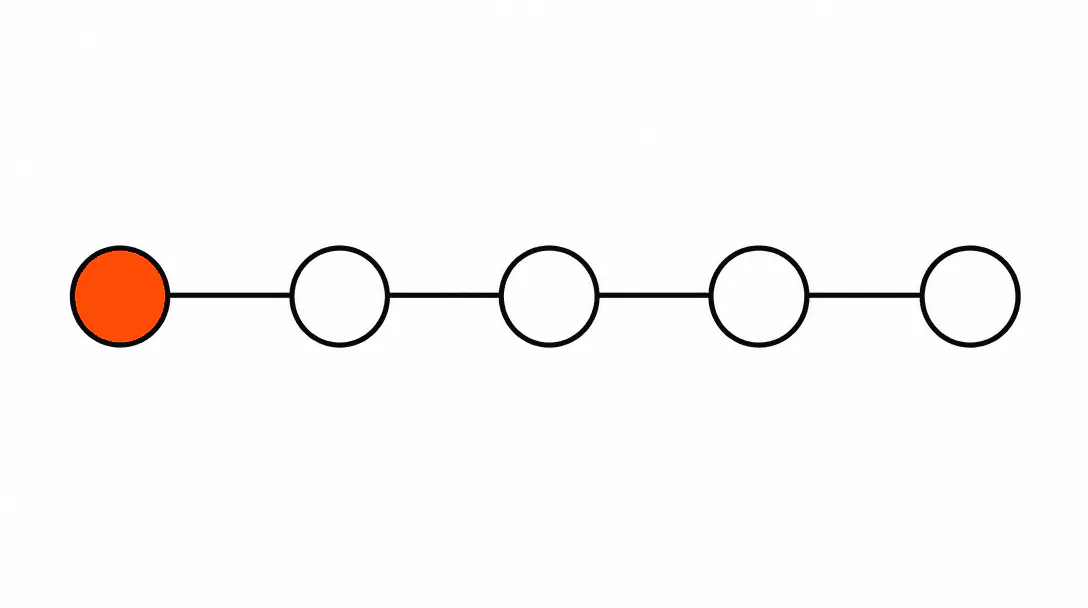
Send five messages to a lead who doesn't book right away, and you'll close most of the ones that are ever going to close. That's the basic reality. The research on this has been consistent for years: roughly 80% of sales require five or more follow-up touches, yet nearly half of businesses stop after the first one. The leads don't disappear. The follow-up does.
This post is a build spec for a 5-touch nurture sequence. Day 0 through Day 14, what goes in each message, when to use SMS versus email, and how to wire the exit conditions so you don't keep emailing someone who already booked. Part of the broader system explained in turning website visitors into customers, the nurture sequence sits between the first inquiry and the signed agreement. Get it right and leads convert on their own timeline. Get it wrong and you either burn them out or let them go cold.
Why do most lead nurture sequences fail?
Most nurture sequences fail for one of two reasons: they stop too early, or they never stop at all. A sequence that fires three emails and quits leaves the majority of still-interested leads sitting in a quiet inbox, never pushed to a decision. A sequence with no exit conditions keeps emailing people after they've already booked, which is the kind of thing that makes a customer regret choosing you before the job even starts.
The most common mistake we fix in a lead nurture audit is a sequence with no exit condition. The system keeps emailing booked clients about booking, which kills trust before the job even starts. It sounds like an obvious problem to avoid, but it is genuinely the first thing broken in the majority of the setups we review. The automation runs, the owner assumes everything is fine, and the newly-booked client quietly wonders if anyone on the other side is paying attention.
The fix is structural. You need a defined start, a defined arc of messages, and a set of conditions that pull any lead out of the sequence the moment they take action.
What is the right length for a lead nurture sequence?
Five touches over 14 days is the right length for most service businesses handling inbound inquiries. This covers the realistic window between when someone reaches out and when they either commit or move on. Go shorter and you miss leads who needed a second or third nudge to make a decision. Go longer in a compressed timeframe and you tip from helpful into annoying.
The five touches follow a clear arc:
- Day 0: Instant confirmation (sent within minutes of the inquiry)
- Day 1: A single piece of genuine value related to the lead's problem
- Day 3: Social proof, real client outcomes, what the result looks like
- Day 7: Address the most common objection before the lead voices it
- Day 14: A clear, low-pressure last call to take action
After Day 14, move anyone still unresponsive to a lower-frequency long-term list rather than dropping them or extending the active sequence. Some leads take months to be ready. A monthly check-in keeps you visible without becoming noise.
The average time it takes a business to respond to an inbound lead. Most of the damage happens before the nurture sequence even starts.
What does each message in the sequence actually say?
Each touch in the sequence has one job, and it should do only that job. Stacking multiple asks or messages into a single email dilutes both of them.
Day 0: The instant confirmation
The Day 0 message confirms receipt, sets expectations, and gives the lead one easy next step. Keep it under 150 words. The tone is: "We got it, here's what happens next." Don't pitch anything. The lead just filled out a form; they want to know someone received it and will follow up, not a sales letter.
A good confirmation message includes: an acknowledgment of the specific thing they inquired about (not just "thanks for your message"), a realistic window for when a real person will follow up, and one optional shortcut (a booking link or a direct phone number for leads who are ready to move faster).
SMS works well for Day 0 because text messages surface immediately. If the inquiry came in via a web form, a quick text acknowledgment often arrives while the lead is still on the site deciding whether to browse your competitors. Response speed has a direct relationship with contact rate, and the Day 0 message is the first signal you send about how quickly your business operates.
Day 1: The value send
Twenty-four hours after the inquiry, send something useful. Not a promotion. Useful. A common mistake here is treating Day 1 as a second sales email. That's not what it is. The lead is still deciding whether you're worth their time, and the single fastest way to answer that question in your favor is to give them something they can use whether or not they hire you.
For a roofing company, that might be a short explanation of what to look for on an inspection report. For a law firm intake, it could be a clear breakdown of what to gather before the first call. For a salon or med spa, it's the specific questions to ask any provider about a service they're considering. The point is that the content matches the problem they raised in the inquiry. Generic "here's what we do" content at Day 1 is the fastest way to get unsubscribed.
Email is the right channel for Day 1. It carries more information without the intrusive quality of a second text. Keep the subject line specific: it should reference the problem they came in with, not a generic company name or offer.
Day 3: Social proof
By Day 3, the lead has had time to think and probably look at a few competitors. The Day 3 message brings them back with evidence. This is where you show, briefly, what the outcome of working with you looks like. Real client situations, described in qualitative terms: what changed for them, how the process felt, what they didn't expect.
The rules from a trust standpoint: no invented names, no fabricated numbers presented as a specific client's results. The credibility of a real, plainly described outcome is higher than a polished testimonial with a fabricated percentage attached to it. "A law firm we worked with went from a paralegal manually chasing leads in Outlook to an intake system that filters, qualifies, and routes inquiries before anyone touches them manually" is more believable than "We increased conversions by 340%."
Day 7: Address the objection
At Day 7, a non-response usually means one of a small set of things: cost, timing, or uncertainty about whether the outcome applies to their situation. The Day 7 message picks one of these (the one most common for your business category) and addresses it plainly.
A good objection email isn't defensive. It acknowledges the concern, offers a real answer, and closes with a low-friction path forward. For service businesses where price is the main friction, this is a good place to explain how your engagement actually works (what's included, what's not, what the typical starting range looks like) without anchoring to a specific number unless you have to. The goal is to remove the blockers, not to close on the spot.
Day 14: The last call
The Day 14 message is short. It states plainly that this is your last follow-up for now, names the specific thing they inquired about, and gives them one action to take. The tone is calm, not pressured. "I don't want to crowd your inbox. If now isn't the right time, no problem. The link below is open whenever you're ready." That's it. A short, direct close with a clear off-ramp. Leads who get a soft last-call often respond to the last-call email specifically because it doesn't feel like a push.
When should you use SMS versus email?
The channel choice depends on the time of day, the urgency of the touch, and how much content the message needs to carry. SMS is for fast-read, low-friction moments. Email is for anything that needs context or supporting content.
A practical framework for service businesses:
- Day 0 (confirmation): SMS, sent immediately. Text gets seen. Voicemail does not. Research from Invoca puts the share of business calls that go unanswered at roughly 26%, and fewer than 3% of voicemail-routed callers leave a message. A text acknowledgment sidesteps that dead zone entirely.
- Day 1 (value): Email. Longer content, a useful resource, or a link to something readable. Text is too short a canvas for anything substantive.
- Day 3 (social proof): Email. Testimonials or outcome descriptions need a little room.
- Day 7 (objection): Email. Addressing a concern requires enough space to do it well without feeling rushed.
- Day 14 (last call): Either, or both. A brief SMS that says "Sent you a note about your inquiry, check your inbox" paired with a short email can lift open rates on the last touch without feeling spammy.
Avoid SMS after 8 PM or before 9 AM, both for the recipient's experience and to stay on the right side of TCPA compliance rules around consumer text messaging.
Why are exit conditions non-negotiable?
Exit conditions are the part of the sequence that tells the automation to stop. They are not optional because their absence creates the single most damaging failure mode in lead follow-up: the system continues messaging someone who has already taken action.
A booked client who keeps receiving "are you ready to book?" emails doesn't just get annoyed. They start to question whether the business they just hired actually tracks anything or if it's running on autopilot. That erosion of confidence happens before the first appointment. For a law firm or a service business where trust is the product, it's a real problem.
The exit conditions that every nurture sequence needs:
- Booking: The moment a lead books an appointment, they exit the nurture sequence and enter a separate confirmation and onboarding flow.
- Proposal accepted: Same rule. The lead has converted. Stop selling.
- Explicit opt-out: Any "stop," "unsubscribe," or equivalent response on SMS must immediately halt all messages. This is also a TCPA requirement, not just good practice.
- Manual override: If a real person on your team talks to the lead and marks them as "in conversation" or "proposal sent," the sequence should pause. A lead who is actively talking to your team doesn't need automated follow-up competing with that conversation.
The technical implementation varies by CRM, but the logic is universal. Any action that moves the lead forward should trigger removal from the nurture queue. If your system can't do that automatically, it's time to look at building a proper follow-up process that connects your pipeline status to your messaging.
What does this look like in a real service business context?
The clearest version of this problem we run into is intake systems that look like they have follow-up but functionally don't. A law firm we worked with had an intake form on their website, a CRM they were paying for, and a team member whose informal job was sending "just checking in" emails from her personal Outlook. Anything that sat for more than a few days without a response went cold. There was no sequence, no timing logic, no exit condition, and no visibility into which leads were active versus gone. The firm had no idea how many inquiries were slipping past them because nothing was tracking it.
Once the sequence was live: Day 0 text went out automatically, the paralegal's job shifted from chasing to reviewing, and the CRM started surfacing which leads hadn't responded so the team could prioritize manual outreach on the highest-value ones. The automated touches handled the volume. The humans handled the judgment calls. That division of labor is the actual value of building the sequence correctly, not replacing the human, but freeing them to do what only a human should do.
This connects directly to the broader point in the post-proposal follow-up sequence: automation handles the repeatable touches, but the system has to know when to hand off to a person and when to stand down entirely.
How do you write nurture messages that actually get read?
The biggest writing mistake in service business nurture sequences is trying to sound like a brand instead of sounding like a business that knows the prospect's problem. Subject lines like "Exciting news from [Company]" get ignored. Subject lines that reference the specific thing the person asked about get opened.
A few principles that hold across all five touches:
- Write to one person. "Hey [First Name]" is fine. The copy itself should feel like you're talking to the one person reading it, not broadcasting to a list.
- One message, one point. Every email has one thing it's trying to accomplish. If you catch yourself adding a second CTA or a second benefit, cut one.
- Short subject lines. Under 50 characters if possible. Something specific: "Quick question about your roof" outperforms "Following up on your recent inquiry."
- Plain text formatting. Heavy HTML emails with logo headers and brand banners look like marketing. A plain text email or a minimal template looks like a real person wrote it. For a 5-touch sequence on service inquiries, that perception matters.
- One action per email. One link, one ask, one next step. The more options you give, the more likely the reader chooses none of them.
The sequence does its best work when each message feels like a continuation of a conversation rather than a fresh marketing push. The lead reached out to you. You're following up on that specific thing. That thread carries through all five touches.
How do you know if your nurture sequence is working?
Three numbers matter for a service business nurture sequence: open rate by touch, response rate by touch, and conversion rate (inquiry to booked appointment) across the sequence as a whole. Businesses that pair a strong nurture sequence with a lead response and automation system see the biggest gains because both halves of the pipeline are covered. If your site is still missing a clear call-to-action that captures inquiries in the first place, the broader website and conversion system is worth reviewing first.
Open rate tells you if the subject lines are working and if the sender name and domain have good deliverability. A drop in open rate between Day 1 and Day 3 usually means the Day 1 email underdelivered and people stopped engaging. A strong open rate on Day 14 with low conversion means the last-call copy needs work.
Response rate by touch is the more useful signal for service businesses. A reply, a booking, even a reply that says "not now" is valuable data. It tells you which message in the sequence resonates enough to prompt action, and where the silence tends to happen.
Conversion rate (inquiry to booked) is the metric the sequence ultimately moves. Set a baseline before you build the sequence, measure over 60 to 90 days, and compare. If the sequence is working, conversion rate from inquiry to booked appointment goes up. If it doesn't, the problem is usually one of three things: the initial contact speed (the Day 0 message arriving too slow), the exit conditions not firing (booked leads still receiving nurture), or message content that doesn't match what the lead actually cared about when they inquired.