
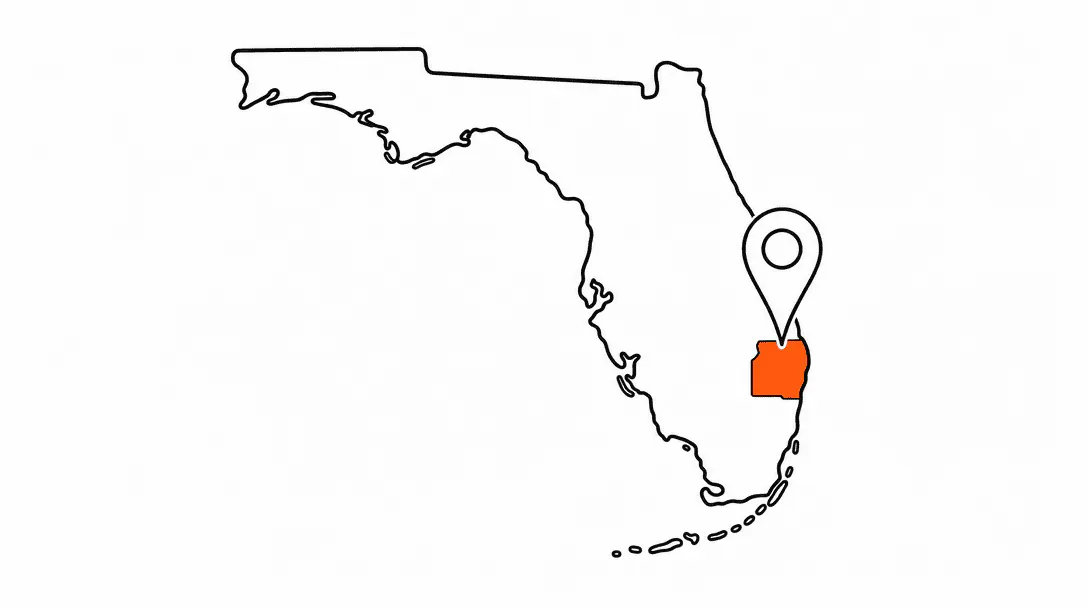
The fastest way to book more clients in Palm Beach Gardens is to be the first business that responds to an inquiry. That single operational fact outweighs almost every other marketing consideration in this market. Palm Beach Gardens homeowners, particularly in neighborhoods like PGA National, Mirasol, Frenchman's Creek, and Ballenisles, are accustomed to options. When they need a plumber, a cleaning company, or a home-theater installer, they send multiple quote requests at once. The business that answers first tends to own the conversation.
Getting found online is the prerequisite, but getting found without a system to capture and respond to inquiries means paying for visibility that converts somewhere else. This post covers both layers: the signals that put you in front of the right homeowners in Palm Beach Gardens, and the booking infrastructure that turns that traffic into confirmed appointments.
Why is the Palm Beach Gardens market different from the rest of South Florida?
Palm Beach Gardens sits in a household income bracket where quality and speed matter more than price, which changes how service businesses need to position themselves online. The 33410 and 33418 ZIP codes consistently show among the highest median household incomes in Palm County. Homeowners in these areas are not hunting for the lowest quote. They are looking for the most credible, most responsive provider who clearly serves their neighborhood.
That distinction has practical implications for your website, your Google Business Profile, and your follow-up timing. A generic "South Florida" homepage does not signal to a Mirasol homeowner that you understand their community or have worked inside gates like theirs before. The businesses that win consistently in PBG are the ones whose digital presence reflects the specificity of the market: photos from real local jobs, reviews that mention the neighborhoods by name, and a booking process fast enough to hold interest before the next provider responds.
For a broader view of how digital visibility works across the region, the South Florida businesses getting found online guide covers the foundational layer that underpins local presence across Palm Beach and Martin counties.
What trust signals actually matter to Palm Beach Gardens homeowners?
Google reviews are the single most visible trust signal for local service businesses, and in Palm Beach Gardens, volume and recency both count. A business with 80 reviews from two years ago competes poorly against one with 35 reviews posted in the last six months. The date of a review tells the homeowner whether you are still actively working in the area.
Beyond reviews, Palm Beach Gardens homeowners consistently look for:
- Licensing and insurance credentials that are visible on the website, not buried in a footer PDF. For services that involve access to the home, this is often a deciding factor before the homeowner even submits a form.
- Named service areas. A map graphic that highlights Palm Beach Gardens neighborhoods (PGA National, Alton, Frenchman's Reserve, Ballenisles, Mirasol) signals local knowledge. "We serve Palm Beach County" does not.
- A professional, fast-loading site. Homeowners in this market are often comparing your site against providers who have invested in their online presence. A site that loads slowly or looks dated is a signal about how the business operates overall.
- Consistent business information. Your name, address, and phone number should be identical across your Google Business Profile, your website, and any directory listings. Inconsistencies affect how confidently Google surfaces your business in the map pack.
of consumers regularly read reviews before choosing a local service business.
Does my website need a Palm Beach Gardens-specific page?
Yes. A dedicated local landing page for Palm Beach Gardens serves two purposes: it tells Google your business is genuinely relevant to searches in that location, and it tells the homeowner you actually operate there. These are different problems with the same solution.
A well-built local page for PBG includes the community names you serve, a headline that matches what the homeowner is searching for ("HVAC repair in Palm Beach Gardens" rather than "trusted HVAC experts"), and a booking form or phone number that is visible without scrolling. The page should also include real photos from local jobs when you have them. Stock photos of generic houses do not build the same credibility as a project photo from a PGA National home the homeowner might recognize.
The mechanics of building a page that actually converts are covered in detail in the landing pages that book jobs guide. The short version: every element on the page should either answer a question the homeowner has or remove friction from the path to booking. Anything else is clutter.
How does a booking system change what happens after someone finds you?
Getting found is only half the equation. What happens in the minutes after someone submits a form or calls and hears voicemail determines whether you win the job or watch it go to a competitor. Palm Beach Gardens has enough service options that homeowners who do not hear back within a reasonable window simply move on.
Across the systems we have built for service businesses in this market, one pattern shows up on almost every audit: the businesses losing the most jobs are not losing them because of price or reputation. They are losing them because their inquiry workflow has a gap. A form that routes to a shared inbox checked twice a day. A voicemail that does not trigger a text-back. A booking page that requires three steps to confirm an appointment time. Each of these is a place where a lead falls out.
A home cleaning company we worked with in Palm Beach Gardens charged well above market rate and had excellent reviews. They were still losing jobs to competitors who charged less, because their contact form went to a shared email address that the team checked on weekday mornings. Inquiries that came in Thursday evenings or over the weekend went unanswered until Monday. By the time someone replied, the homeowner had already booked with the provider who responded Saturday afternoon.
The fix was not complicated: automated acknowledgment the moment a form is submitted, an immediate text-back to the phone number they provided, and a direct booking link so the homeowner could confirm a time without waiting for a human response. The expensive part had already happened (the homeowner found them and chose to reach out). The system failure was in the twelve to forty-eight hours that followed.
Average inbound lead response time among businesses that do respond, with roughly 23% never responding at all.
For a full breakdown of how response timing affects contact rates, the how fast to respond to a lead post covers the research and the practical setup. The summary is not surprising: speed is the variable most businesses underinvest in, and it is the one that shows the fastest return when you fix it.
What happens to leads that come in after hours?
Palm Beach Gardens homeowners search and request quotes in the evenings and on weekends. That is not unique to this market, but the gap between what homeowners expect and what most service businesses provide is wide enough here to be a real competitive advantage for the businesses that close it.
An automated lead response that fires within seconds of a form submission, an after-hours text-back when a call goes to voicemail, and a booking calendar that confirms the appointment automatically, these are not sophisticated technologies. They are table stakes for a service business that wants to compete in a market where the homeowner has several credible options and will not wait until Monday to hear back from you.
The broader conversion framework this post is part of, covering everything from form design to follow-up sequencing, is in the Turn Visitors Into Customers guide. The local piece (getting found in PBG) and the conversion piece (booking those leads once they arrive) are both necessary. Neither one alone is enough.
How should online booking actually work for a Palm Beach Gardens service business?
The booking flow should have as few steps as possible between the homeowner's interest and a confirmed appointment on both calendars. The best setups we have built let the homeowner select a date, receive an immediate confirmation by text and email, and get an automated reminder before the appointment. The business owner sees the booking in their calendar without any manual entry.
What kills conversion is a booking flow that asks for too much information upfront. Requesting a project description, square footage, preferred product brands, and three available time windows before the homeowner has spoken to anyone is a friction pattern that kills inquiry rates. Collect what you need to confirm the appointment. Gather the project details in the intake call or an automated pre-visit questionnaire that goes out after the booking is confirmed.
The full setup process for service business booking systems, including how to wire the calendar to your existing phone and how automated reminders reduce no-shows, is in the online booking for service businesses guide.
Where should a Palm Beach Gardens service business start?
If you have an existing website and Google Business Profile, the highest-return first step is almost always lead response. Before building new landing pages or running ads, know what happens when someone submits a form or calls and gets voicemail right now. If the answer is "someone checks the inbox in the morning" or "the call just goes to voicemail," fixing that first will produce results faster than any traffic improvement.
The sequence we typically build in this market:
- Immediate automated response to every form submission, with a booking link and a confirmation text to the number they provided.
- Missed-call text-back so a call that hits voicemail triggers an automatic "We missed your call, here's how to reach us or book online" message within seconds.
- A Palm Beach Gardens-specific landing page that names the neighborhoods you serve, shows local work, and makes the booking path obvious.
- A review collection system that asks satisfied clients for a Google review automatically after the job is complete. This builds the volume and recency that future homeowners look for.
None of these require starting from scratch if you already have a website. They can be layered onto an existing setup. The businesses in PBG that outperform their competitors online have usually built this stack incrementally rather than all at once.
For the visibility side of the equation, getting your business into the Map Pack and AI answers before the homeowner ever reaches your site, the North Palm Beach visibility guide covers the GBP and citation work that underpins local search in the neighboring village. If your business also touches the Martin County corridor, the Palm City guide covers that growing market.
Ready to build a website and booking system that converts Palm Beach Gardens homeowners into confirmed appointments? See how we approach web design and conversion for local service businesses, or book a free strategy session to review what your current setup is costing you.
Want the work done for you? See our web design services in Palm Beach Gardens and local SEO services in Palm Beach Gardens.