
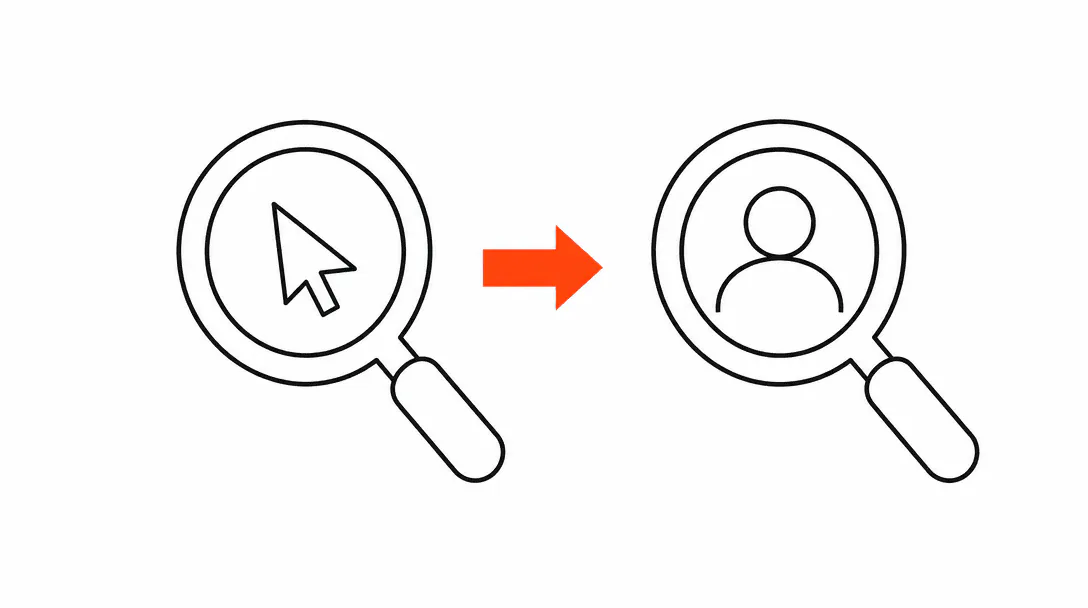
Google Ads and Meta Ads solve different problems. Google puts you in front of someone who is already typing "HVAC repair near me" right now, credit card ready. Meta puts your business in front of someone who does not know they need you yet, scrolling through their feed on a Tuesday morning. Treating them as interchangeable is how service businesses burn through ad budgets without results.
This post is part of the Turn Visitors Into Customers cluster, which covers how to build a system that converts traffic, not just attract it. The question of which ad platform to run first fits squarely inside that framework: you are choosing where to put money based on where your customer is in their decision process, before they ever land on your site.
What is the core difference between Google Ads and Meta Ads?
Google Ads is demand capture. Meta Ads is demand creation. The distinction matters more than any feature comparison because it changes who you are reaching and how ready they are to hire you.
When someone types "emergency plumber Jupiter FL" into Google, the decision to hire is basically made. They need help now. Google Ads lets you bid for that moment. You show up, they click, they call or fill out a form. The path is short because the intent was already there before your ad appeared.
Meta (Facebook and Instagram) works differently. The people scrolling their feeds were not looking for you. They were not searching for anything. A good Meta ad interrupts that scroll in a way that makes someone stop and think: "Actually, I've been meaning to deal with that." The path to conversion is longer because you are doing some of the work of convincing people they need the service at all.
Neither approach is better in absolute terms. The better question is: does your customer know they have the problem right now, or do they need to be shown it first?
Which service businesses should start with Google Ads?
Services with urgent, identifiable problems are the clearest case for Google Ads first. The customer has a broken pipe, a dead AC unit, or a roof leak. They go to Google, they search, they need someone today. These are not discovery moments; they are solution-finding moments.
The categories where Google Ads consistently performs well for service businesses include:
- Emergency home services: plumbing, HVAC repair, electrical, locksmith, garage door
- Scheduled but necessity-driven services: pest control, water heater replacement, roof repair
- Health and dental with active symptoms: "tooth pain dentist near me," "back pain chiropractor"
- Legal intake with a triggering event: car accident attorney, DUI defense, estate planning after a death in the family
The signal in all of these: the customer is already searching. The problem has occurred or the appointment is overdue. Google Ads meets them at that exact moment. You are not convincing anyone; you are simply being visible when the hand goes up.
The cost-per-click in these categories can be high, sometimes substantially so, but the intent quality tends to justify it. A plumbing lead who typed "burst pipe repair" and clicked your ad is worth more than most other traffic sources at any price.
Which service businesses should start with Meta Ads?
Services where the customer needs to be shown a possibility, not find a solution, are the better fit for Meta Ads first. These tend to be elective, aspirational, or higher-ticket decisions that require more consideration before someone searches.
Think about cosmetic services: teeth whitening, Botox, body contouring, home remodels, outdoor kitchens. The person who would eventually book is not spending Tuesday morning searching for these things. But if you show them a compelling before-and-after or a project photo that makes them think "I want that," you plant the seed. They might search later, or they might click straight to your booking page.
Categories where Meta Ads tend to perform well for local service businesses:
- Elective aesthetics and wellness: cosmetic dentistry, med spa treatments, weight loss clinics, chiropractic wellness programs
- Home improvement with a visual payoff: kitchen remodels, bathroom renovations, landscaping, custom closets, painting
- Recurring personal services: salons, massage, personal training, cleaning services
- Planned big-ticket purchases: windows, flooring, pools, solar, roofing (non-emergency)
The key difference from the Google list above: none of these are emergency decisions. The customer has time to scroll, to be inspired, to think it over. Meta Ads work inside that consideration window in a way Google cannot.
What does Google Ads actually cost for a service business?
Google Ads costs vary more by category than almost any other marketing channel, and that range surprises most service business owners the first time they see it.
In low-competition categories like residential cleaning or mobile pet grooming, clicks can run $3 to $8. In highly competitive categories, cost-per-click climbs steeply. Legal (especially personal injury), HVAC replacement, and cosmetic dentistry can run $30 to $150 per click in metro markets. For a campaign converting at 5%, a $60 CPC means $1,200 per lead. That math only works if the average job value justifies it.
The factors that drive cost up:
- Geographic density of competitors (more competition in a city core than in a suburb)
- Match type (broad match buys cheaper clicks that convert worse; exact match costs more but converts better)
- Landing page quality (Google's Quality Score system adjusts your effective cost per click based on how relevant your landing page is to the ad)
- Time of day and day of week bidding (emergency service businesses often overpay by running 24/7 when most conversions happen in specific windows)
One issue we see repeatedly: businesses sending Google Ads traffic to their homepage instead of a dedicated service page. That single mistake often cuts conversion rates by more than half and drives Quality Scores down, which increases what they pay per click. If you are going to run Google Ads, the landing page matters as much as the campaign itself. The landing page guide in this cluster covers exactly how to structure that page.
What does Meta Ads actually cost for a service business?
Meta Ads typically cost less per click than Google Ads in equivalent service categories, but the comparison is not always fair because the intent is different. A $4 click from Facebook that takes two weeks and five follow-ups to convert may cost more in total than an $18 click from Google that books the same day.
Cost-per-lead on Meta for local service businesses generally runs $15 to $60 for well-structured campaigns, with considerable variation by creative quality, audience targeting, and offer. Industries with a strong visual story (before-and-after results, project photos, transformation content) tend to see the lower end of that range. Services without an obvious visual hook pay more.
Two things drive Meta Ads costs more than anything else:
- Creative quality: Meta's algorithm rewards ads that people engage with naturally. A genuine photo or video of real work outperforms a polished but generic stock image almost every time in local service categories.
- Audience precision: Broad targeting in a metro area with a small budget spreads too thin. Tightly defined audiences by ZIP code, demographic, or interest signal get more value from the same spend.
If you want a fuller breakdown of whether Meta makes sense for your specific situation before committing budget, the should you run Meta Ads post covers the pre-conditions in detail.
of small businesses using generative AI report meaningful efficiency gains, including in ad targeting and creative production.
What is retargeting, and why does it change the math for both platforms?
Retargeting is the practice of showing ads specifically to people who have already visited your website, watched your video, or interacted with your content. It is where the two platforms start working together rather than competing.
Here is a scenario that comes up often in the businesses we work with: a service provider runs Google Ads successfully. Traffic is coming in. But a significant percentage of those visitors, people who clicked, looked around, and left without calling, are now gone. The business paid for that click and got nothing. Retargeting on Meta is how you recover that audience.
You install a Meta Pixel on your site (a small piece of tracking code), and within a week you have a custom audience of everyone who visited but did not convert. Then you run a small Meta retargeting campaign specifically to those people. The cost is low because the audience is small and targeted. The conversion rate is higher because these people already showed intent by visiting. They just needed another touchpoint.
A cosmetic dentist we worked with ran into a pattern many service businesses hit: they started with Google Ads for "teeth whitening near me," spent roughly $3,000 over three months, and saw results but at a high cost per consult. A lot of the problem was branded and near-match keyword spend eating budget on clicks that should have been cheap. When we set up a Meta retargeting campaign for their existing site traffic and shifted the before-and-after creative to target that warm audience specifically, the cost per consult dropped significantly. Not because Google was wrong for them; it still works. But because retargeting turned sunk ad spend into a second chance at every visitor they had already paid to attract.
For a complete walkthrough of how retargeting works technically and strategically, the running Meta Ads for local service businesses guide covers the setup from pixel to campaign structure.
How do you decide which to run first?
Run through these four questions in order. Your answers will tell you where to start.
1. Are your customers searching for you by name or by service type right now? If yes, Google Ads captures that search traffic immediately. If most of your customers do not know they need your service yet, Google has less to capture.
2. Is your service a same-day or near-term need? Emergency or time-sensitive services (HVAC, plumbing, locksmith, urgent dental) convert fast on Google because the customer's timeline is short. Services with a longer consideration window (remodeling, elective health, salon memberships) convert better through Meta's slower nurturing path.
3. Do you have strong visual proof of your work? Before-and-afters, project photos, client transformation photos. If yes, Meta Ads will be cheaper and more effective for you. If your service is not visually demonstrable (tax prep, legal services, insurance), Meta creative is harder to produce and Google intent becomes more valuable.
4. What is your monthly budget? For Google Ads to work in most service categories, you need enough budget to collect meaningful data: typically at least $1,000 to $2,000 per month. Under that threshold, you may not see enough clicks to know what is working before making decisions. Meta can start smaller, especially for retargeting, but cold audience campaigns on Meta also need time and budget to exit the learning phase.
If you are running paid ads and want to understand whether the system catching those leads is built to convert them, the broader conversion framework in Turn Visitors Into Customers is worth reading alongside this post. Paid traffic that hits a weak landing page or a slow site with no follow-up system is money spent on visitors who leave.
Are there situations where both make sense from day one?
Yes, specifically when you have an existing site with reasonable traffic and the budget to cover both. The typical split in that case: Google Ads for active searchers, Meta for retargeting the people Google Ads already brought to your site.
This pairing works because the audiences do not overlap in any expensive way. The Google budget is working for new visitors; the Meta retargeting budget is working a second time on the same visitor. You are not paying twice for the same lead, you are closing the loop on leads you already paid to attract.
The budget needed to run both simultaneously is not as large as most owners assume. A Google campaign at $1,500 per month paired with a Meta retargeting campaign at $400 to $500 per month is a reasonable starting point for a local service business with decent site traffic. As the retargeting audience grows (more site visitors from both organic and paid), the Meta side gets more efficient without requiring proportional budget increases.
Where this gets expensive is when businesses run both platforms at scale with cold audiences on Meta at the same time as a broad Google campaign. That is generally too much surface area for a local service business to optimize and measure at once. Pick the right starting point, prove it out, then add the second platform once you have a baseline. Paid ads work best when the rest of your visibility foundation is solid. If you have not yet nailed organic and map-pack rankings, the local visibility service is often the smarter first investment. When you are ready to run paid growth, that sits under our full capabilities alongside the conversion infrastructure that paid traffic needs to perform.
What do you need before either platform can work?
Paid ads accelerate what already exists. They cannot rescue a broken conversion path. Before spending on either platform, these things need to be solid:
- A landing page built for one service, one action. Your homepage is not a landing page. Ads that send traffic to a homepage with five different service categories and a generic contact form convert poorly. The page should match the ad's offer exactly and have one clear next step.
- A fast lead response system. The data on this is stark: reaching a lead within five minutes of their inquiry is roughly 100 times more effective at making contact than waiting 30 minutes (InsideSales/MIT, 2007). If your business cannot respond to a form submission within five minutes during business hours, paid ads will generate leads your follow-up system cannot capture.
- Call tracking or form attribution. You need to know which clicks turned into calls and which turned into booked appointments. Without this, you cannot tell if the campaign is working or where to put more budget.
- A Meta Pixel installed. Even if you are starting with Google Ads, install the Meta Pixel on your site before you run a single Google ad. That way, by the time you add retargeting, you already have a warm audience built up from organic traffic and Google clicks.
The gap between "we ran ads" and "ads worked" is almost always one of these four things, not the platform choice. The pre-conditions for Meta Ads post covers the readiness checklist in more detail.