
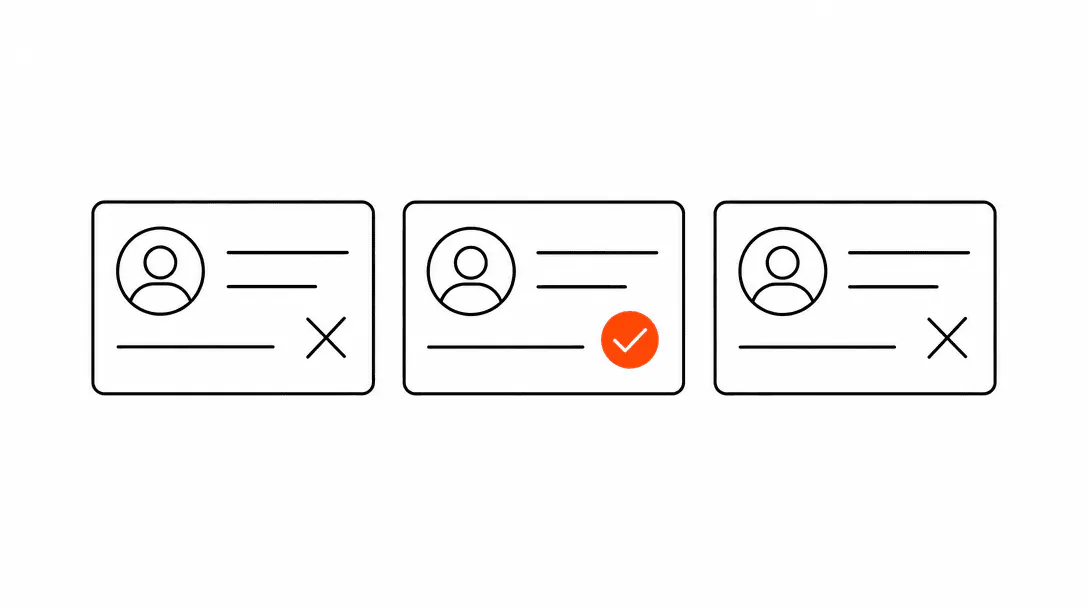
Mismatched business listings are a data integrity problem, not a marketing problem. Google's local ranking algorithm cannot resolve conflicting information at scale: two different phone numbers on two major directories create two candidate entities, and when Google cannot determine which one is authoritative, it hedges. The result is suppressed map pack rankings and a weakened presence in AI-powered search results. The competitor whose data is clean tends to win.
This post is part of our broader look at how customers find businesses today. Citation consistency is one of the foundational layers of that system. Get it wrong and everything built on top of it, including your Google Business Profile performance and your presence in AI search answers, works harder than it should. NAP consistency is part of the visibility infrastructure Lyfework builds for service businesses through our Visibility services, serving Stuart, Jupiter, Port St. Lucie, and the surrounding Treasure Coast communities.
What exactly is NAP, and why does it matter for local SEO?
NAP stands for Name, Address, and Phone number: the three data points Google and other search engines use to identify a business as a distinct, real-world entity. Every time your NAP appears somewhere online (a directory, a review site, a local chamber of commerce page, a news article), that citation adds a small vote of confidence that your business exists and is located where you say it is. The more consistent those votes are, the more confident Google becomes that your entity is legitimate.
The problem is that data spreads across the web in ways you never control directly. A data aggregator syndicates your listing to 200 directories. A third-party pulls from that aggregator. A franchisee submits their own version. You move offices and update Google but forget Yelp. Over time, the web accumulates a patchwork of slightly different versions of your business, each one introducing a small degree of uncertainty into Google's entity graph.
Google does not manually reconcile these conflicts. Its systems try to infer the canonical version from the weight of evidence. If most signals point one direction, Google follows them. If signals are split, confidence drops. Lower confidence means lower map pack placement and less likelihood of appearing in the AI-generated local summaries that are now appearing at the top of many search results.
Of consumers regularly read reviews and directory information before choosing a local business, making accurate listings a prerequisite for converting any search visibility at all.
What citation errors do most businesses actually have?
The most common citation errors are smaller than most people expect, and that is exactly what makes them dangerous. Every new local client audit we run starts with a citation scan. The most frequent issue we encounter is not a completely wrong address: it is a suite number that appears on some listings and not others. That single discrepancy, something as minor as "Suite 4" versus nothing at all, is enough to suppress map pack rankings for competitive queries because Google reads those two versions as potentially different physical locations.
After suite number inconsistencies, the next most common issues are:
- Business name variations. "Coastal Plumbing" versus "Coastal Plumbing LLC" versus "Coastal Plumbing Services." Each variation registers as a slightly different entity signal.
- Old phone numbers. A number that was active three years ago still appears on dozens of directories that were never updated. If a competing signal is strong enough, Google may associate the old number with your current listing as an alternate, diluting the clarity of your entity profile.
- Moved addresses with partial updates. A business relocates and updates its Google Business Profile and website but leaves the old address intact across Yelp, Apple Maps, Bing Places, and a long tail of niche directories. Google then has competing location signals for what it believes may be the same entity.
- Punctuation and abbreviation differences. "St." versus "Street," "Ave" versus "Avenue," or a missing directional ("N." versus "North") all register as data variation, though these matter less than the core NAP fields.
We have audited businesses with perfectly accurate data on Google Business Profile and nearly zero consistency everywhere else. Their map pack performance was noticeably weaker than competitors with lower-quality profile optimization but cleaner citation footprints. The lesson is that GBP alone is not sufficient: the broader citation ecosystem has to tell the same story.
Where do your citations come from, and which ones matter most?
Citations enter the web through several distinct channels. Understanding the source helps you prioritize the cleanup work.
Data aggregators are the root of most citation spread. Companies like Data Axle (formerly Infogroup), Localeze (Neustar), and Foursquare collect business data and license it to hundreds of downstream directories. When your data in one of these aggregators is wrong, the error propagates automatically to every directory that draws from that feed. Fixing the aggregator source corrects many downstream errors over time without requiring individual directory edits.
Core local platforms are where most searchers and most AI systems look first. Google Business Profile, Yelp, Apple Maps, Facebook, and Bing Places form this tier. Each of these is also a data source that other systems reference. Apple Maps, in particular, feeds Siri and the Maps app used by a significant share of mobile users, and it draws from multiple aggregators as well as its own submissions.
Industry-specific directories carry relevance signals beyond raw citation volume. A contractor listed on Houzz, an attorney on Avvo, a healthcare provider on Healthgrades or Zocdoc: these niche citations tell Google your business category with more specificity than a generic directory listing. They also tend to attract higher-quality traffic because searchers on those platforms are already filtered by intent.
Editorial citations (local news coverage, chamber of commerce pages, sponsorship listings, local blog mentions) are the hardest to earn and carry the most trust. A local news site citing your business with a consistent NAP is worth more than twenty generic directory listings, partly because it also carries a quality backlink rather than just a data signal.
How do I audit my own citation data?
Start with your canonical NAP. Open your website's contact page and write down exactly how your business name, address, and phone number appear there. This becomes your source of truth. Every other listing in the world should match it character for character, including capitalization, punctuation, and suite format.
With that canonical version in hand, run three separate Google searches: your exact business name in quotes, your phone number in quotes, and your full address in quotes. Review the first few pages of results for each. You will quickly surface the directories that have indexed your data and can spot obvious discrepancies in the snippets before you even visit the pages.
A dedicated citation audit tool goes deeper. BrightLocal and Whitespark both crawl major aggregators and hundreds of directories, generate a report of where you are listed and how your data compares to the canonical version you set as a baseline, and identify listings you did not know existed. These tools save significant time compared to manual discovery and catch aggregator-level data that Google searches often miss.
When reviewing results, pay particular attention to any listing that shows a different address than your current one. That is the highest-priority fix because it introduces a competing location signal. Old phone numbers are second priority. Name variations come third, especially if they include or omit a legal suffix like LLC or Inc. that might cause ambiguity.
How do I actually fix inconsistent citations?
Fix the aggregators first. Corrections to Data Axle, Localeze, and Foursquare propagate downstream and reduce the number of individual directory edits you need to make. Each aggregator has a business portal for submitting corrections. Some require a small fee or a paid subscription to maintain ongoing control of your data; that cost is usually worth it given the volume of directories they feed.
Tackle the core platforms next. Claim and verify your listings on Google Business Profile, Yelp, Apple Maps, Facebook, and Bing Places if you have not already. Claiming a listing gives you direct control to correct the data and to prevent future conflicting edits. Unclaimed listings on major platforms are vulnerable to data overwrite by aggregators and, in some cases, to fraudulent edits.
For the long tail of niche and regional directories, you have two options. You can work through them manually, prioritizing any that appear prominently in Google searches for your business name or that carry significant domain authority. Or you can use a citation management service to distribute your canonical NAP data at scale. Services like Yext, BrightLocal's citation builder, or Whitespark's citation service submit your data to hundreds of directories simultaneously and monitor for future drift.
One thing that trips up a lot of businesses: when you find an old listing with incorrect data, do not delete it. Update it. Removing a citation removes the ranking signal entirely. The goal is to correct the data so the listing continues to vote for your entity, just with accurate information. The only genuine exception is a duplicate listing for the same location on the same platform (two separate Google Business Profile listings for the same physical address, for example), which should be merged or suppressed through the platform's own tools.
A salon we onboarded had moved locations 18 months before we started working with them. They had updated Google Business Profile and their website, but Yelp, Apple Maps, and a dozen niche beauty directories still showed the old address. Google was treating the old address as an alternate entity signal, effectively splitting ranking strength between two "businesses" at different locations. Once all citations matched the new address, the consolidated signal behind their current location strengthened noticeably in the map pack.
Understanding how Google's Knowledge Graph handles local business data helps clarify why this matters at the entity level, not just the keyword level. Your business's identity in Google's system is built from the sum of all these signals, not just what appears on your Google Business Profile page.
Do citation errors affect AI search results, not just Google Maps?
Yes, and increasingly so. AI-powered answers (Google's AI Overviews, ChatGPT with search, Perplexity, and similar tools) rely on the same underlying data ecosystem as traditional local search. When an AI system tries to answer "best plumber near me" or "salon in Jupiter open Saturday," it draws from structured data sources that include directory listings, review platforms, and business profiles. An entity whose data is fragmented or contradictory is harder for an AI system to confidently cite or recommend.
The Google Business Profile and map pack checklist covers how to optimize your GBP specifically, but citation consistency is a prerequisite for that work to have full effect. A well-optimized GBP operating on top of a fragmented citation footprint is like a strong signal transmitting through static: some of it gets through, but not as much as it should.
There is also a review dimension. Consistent NAP data means that reviews on Yelp, Google, Facebook, and niche directories all consolidate around a single recognized entity. If Google is uncertain whether the Yelp listing and the Google listing are the same business, it cannot fully aggregate the social proof from both sources. Citation consistency is part of how you make sure all of your reputation signals point at one entity rather than being distributed across several ambiguous ones.
Is this a one-time fix or ongoing work?
Both. The initial cleanup is a one-time project. Keeping the data clean is ongoing, but it does not require significant effort once the foundation is set.
New directories appear regularly. Data aggregators occasionally overwrite corrected data with stale records pulled from older sources. If you change your phone number, move to a new address, or rebrand, the correction cycle starts again. The businesses that maintain citation consistency over the long term are the ones that treat it as a system rather than a project: they set a canonical NAP document, they monitor their listings quarterly with an automated tool, and they fix conflicts as they appear rather than letting them accumulate.
A monitoring cadence also catches a specific category of problems that many businesses miss: new citations created by third parties. A local blogger writes about your business and uses an old address they found somewhere. A news article pulls your data from a directory with an error. Each of these introduces a new inconsistency, and catching them early is much easier than untangling them after they have been live for a year.
If you want to understand the broader system that citation management sits within, the guide on why your business is not showing up on Google covers citations alongside the other factors (GBP optimization, review velocity, website signals) that determine local visibility. For the technical layer that works alongside citations, the post on local schema markup for service businesses explains how structured data reinforces what your citations say.