
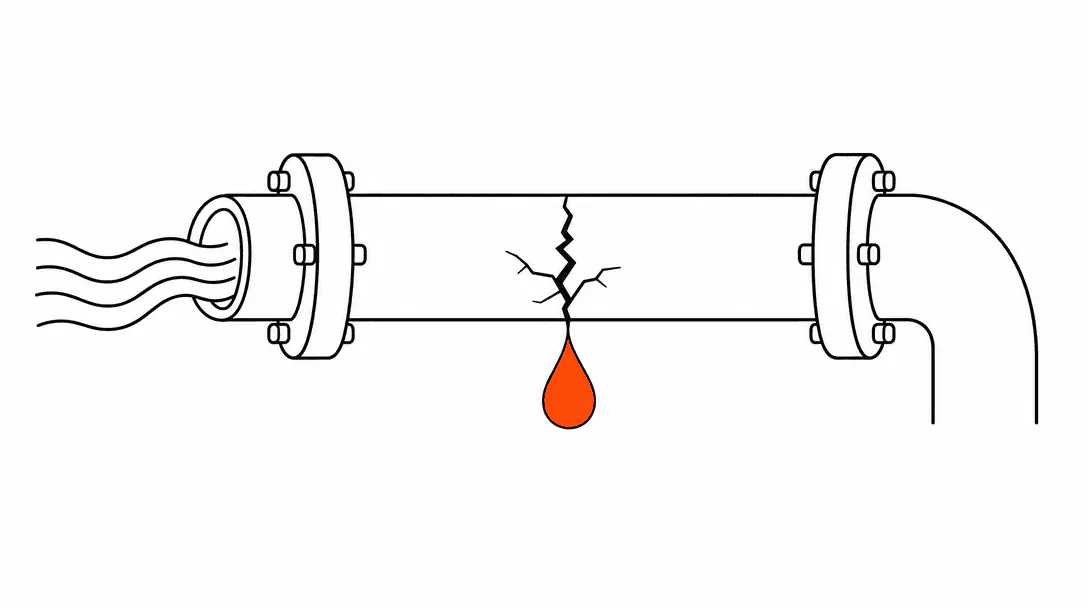
Conversion rate optimization (CRO) is the practice of finding where your website loses visitors before they take the action you want, and then fixing those friction points. It is not about redesigning your homepage or buying more traffic. It is about diagnosing the specific place in your funnel where people stop, and removing that obstruction. If 400 people visit your site this month and four of them book, you have a 1% conversion rate. CRO asks: what happened to the other 396?
This post is part of the Turn Visitors Into Customers cluster, which covers the full system for getting more clients from the traffic you already have. Here, we focus specifically on what CRO means, why it matters more than chasing more traffic, and how to run a 30-minute self-audit that surfaces the biggest leak in your funnel.
Why should you fix conversion before buying more traffic?
Sending more traffic through a broken funnel does not fix the funnel. It just makes the problem more expensive. If your site converts at 1% and you spend $1,500 per month on ads to get 400 visitors, you get four bookings. Double the ad spend and you get eight bookings, but you are now spending $3,000 for the same output a better-converting site could produce from the same $1,500. Every dollar spent on traffic before conversion is understood is partly wasted.
The math shifts fast once you fix the leak. A site converting at 3% instead of 1% produces three times the bookings from the same traffic. That is not a marginal improvement in a business with fixed overhead. It is the difference between a slow month and a busy one, on the same ad budget.
This is why understanding landing page conversion benchmarks matters before you commit to paid growth. You need a baseline. You need to know whether your current rate is a symptom of a broken element or a fundamentally unclear offer.
What counts as a conversion for a service business?
A conversion is any measurable action that moves a visitor closer to becoming a paying client. For most service businesses, the primary conversions are: submitting a contact or inquiry form, calling a phone number displayed on the site, booking an appointment through an online scheduler, or starting a live chat. Secondary conversions include downloading a resource, joining an email list, or clicking through to a key page like your services or pricing page.
You define what counts based on how your business takes in new clients. A salon that books via an online scheduler has a clear primary conversion: the completed appointment booking. An HVAC company whose clients always call first has a different primary conversion: the phone tap. Getting this definition right before you audit matters, because tracking the wrong action gives you misleading data.
The average time businesses take to respond to an inbound lead, meaning most conversions fail before they even reach the phone.
What is the three-question funnel audit?
The three-question funnel audit is a structured method for finding your biggest conversion leak without guesswork. The questions are: where are people landing, where are they leaving, and what action are you asking them to take? Answer all three before touching a single element on your site.
Question 1: Where are people landing? Pull your top landing pages from Google Analytics or your hosting dashboard. Most small business sites receive the majority of paid and organic traffic on the homepage, a single service page, or a location page. If 70% of your paid traffic lands on your homepage and your homepage is a general brand statement with no specific offer, that is the first problem. Traffic needs to land on a page that matches what the ad promised.
Question 2: Where are they leaving? The exit rate (or bounce rate for single-page sessions) on each landing page tells you where the funnel breaks. A landing page with a 90% exit rate and no conversions is not a traffic problem. It is a page problem. Check your analytics for the top pages people exit without completing an action. That list is your repair order, ranked by priority.
Question 3: What action are you asking them to take? Scroll through each landing page and ask: is there a single, obvious next step for a visitor who is ready to book? The most common failure here is multiple competing calls to action (call us, email us, fill out a form, follow us on Instagram) with none of them prominent enough to catch the eye of someone skimming on a phone. Visitors do not read. They scan. If the next step is not immediately obvious, they leave.
How do you actually run a CRO audit in practice?
The first thing we do in a CRO engagement is map the funnel in a spreadsheet: URL, average monthly sessions, exit rate, intended next step, and whether that next step is visible above the fold on mobile. We work through every page that receives meaningful traffic before we touch any design or copy. The leak almost always reveals itself in that spreadsheet before we write a line of code.
We worked with a salon owner who was spending a meaningful monthly budget on ads but booking very few new clients from that traffic. Her conversion rate on paid spend was well below where a well-set-up service page should perform. When we mapped her funnel, we found that her booking widget, the one linked from every ad, had been broken on iPhone for three months. Visitors on desktop could book fine. Visitors on mobile, who made up the majority of her paid traffic, hit the booking page and got a non-functional form. She had no idea because she always tested on her laptop. Once the widget was fixed and the mobile experience was confirmed across multiple devices, her booking rate from that same ad spend climbed without any change to copy, design, or budget.
That is the core premise of CRO: diagnosis before redesign. The most expensive fix is often not the right fix. Sometimes the most expensive fix is not necessary at all.
What can you check in 30 minutes without any tools?
You do not need a paid conversion platform to find obvious problems. Here is a checklist any owner can run with Google Analytics (free) and a phone:
- Open your top landing page on your personal phone, not your usual work device. Complete the primary conversion (fill the form, tap the phone number, try to book). Do this on both iOS and Android if possible. Broken widgets and forms that do not submit are the most common cause of conversion failure, and they are often invisible to the owner because they test on a desktop.
- Check page load speed on mobile. Open Google PageSpeed Insights (free), paste your URL, and read the mobile score. A page that takes more than three seconds to become interactive loses a significant portion of mobile visitors before they see your offer.
- Count the calls to action on your homepage. If there are more than two primary actions visible above the fold, simplify. One primary CTA (book, call, get a quote) with a secondary option (learn more, see our work) is enough.
- Read your headline out loud as if you are a first-time visitor. Does it say clearly what you do, for whom, and in what area? "Welcome to our website" tells a visitor nothing. "Jupiter's highest-rated hair salon, book same-week" tells them everything they need to decide whether to stay.
- Check your contact form on mobile. Submit a test entry. Make sure the confirmation message or redirect actually appears. A surprising number of forms silently fail, and owners find out only when they notice bookings dried up.
That checklist takes under 30 minutes and surfaces the majority of mechanical conversion failures. It is where we start on every audit before we recommend a single structural change.
What is the difference between fixing a bottleneck and redesigning a page?
A bottleneck fix targets one specific friction point without changing anything else. The broken booking widget on mobile is a bottleneck. A slow-loading hero image is a bottleneck. A phone number that is not tap-to-call is a bottleneck. These fixes are fast, low-risk, and often produce an immediate change in conversion rate because you are removing an obstruction, not guessing at a new approach.
A page redesign is appropriate when the core structure of the page is wrong: the offer is unclear, the copy does not address the visitor's actual concern, or the layout creates confusion about what to do next. Redesigns take more time, require more traffic to validate, and carry more risk of making things worse before they get better.
The discipline of CRO is knowing which situation you are in. On almost every audit we run, at least one bottleneck fix is available before any redesign work is needed. The mechanics of a high-converting landing page cover the structural side once the obvious leaks are sealed.
Why does CRO matter even if your visibility is strong?
A business can rank well on Google, get consistent traffic from maps and search, and still convert poorly. The channel that delivers the visitor does not determine whether your site closes them. This is a systems problem, not a marketing problem. Visibility gets people to the door. Conversion gets them inside. Both have to work.
As we lay out in Visibility Is an Operations Problem, most service businesses treat their website as a one-time build rather than an active system. Traffic grows, but the underlying conversion infrastructure never changes. A site built four years ago with a phone-only contact option and no mobile booking was adequate then. Today, that same site is leaking clients every week.
CRO is the operational discipline of keeping that infrastructure current. It is not a campaign. It is an ongoing audit cycle: check the funnel, find the leak, fix it, verify the fix, repeat.
If your site structure or booking flow is the root of the conversion problem, that is a website build issue, not just a copy issue. Our web design and conversion service is built specifically around service businesses that need both a faster site and a cleaner path from visitor to booked client.