
Start with lead response. That's the answer. Before you touch birthday campaigns, referral programs, or re-engagement sequences, build the system that replies to every new inquiry within minutes, around the clock. Every other automation compounds on top of that foundation. Without it, you're building on sand.
This guide is part of the business automation guide for service companies and lays out the specific order we recommend across every client we onboard: three tiers, each unlocking the next, each addressing a distinct category of loss.
Why does the order of automation actually matter?
The order matters because automation tiers build on each other, and skipping the foundation means the upper floors are unstable. Tier 1 protects the revenue you're already paying to generate. Tier 2 keeps clients who are already yours. Tier 3 grows the base. Run them out of order and you end up with a polished growth layer sitting on top of a system that's still hemorrhaging leads and no-shows.
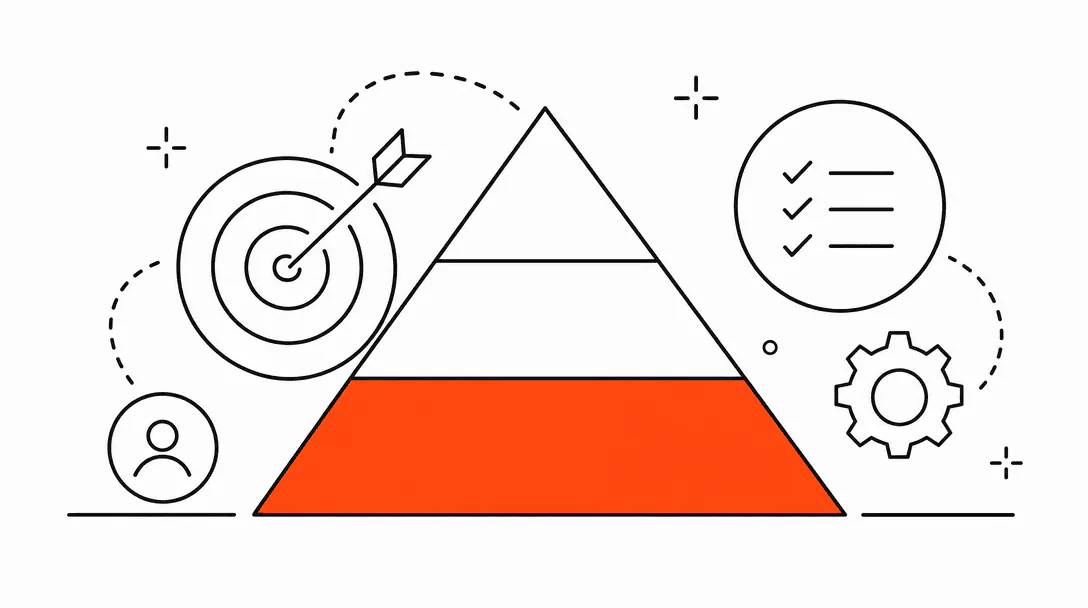
When a new client asks us what to build first, we draw the same triangle every time: the bottom layer is revenue protection (lead response, confirmations, reminders), the middle is retention (post-visit follow-up, reviews, no-show recovery), and the top is growth (re-engagement, referrals, birthday flows). Every business that skipped that first layer to do the third one came back six months later to rebuild the foundation.
The pattern is consistent enough that we treat it as a rule now, not a suggestion.
What is Tier 1 automation, and why build it first?
Tier 1 is revenue protection: the three automations that prevent money from leaking at the earliest and most common failure points before a job is ever booked or completed. Those three are lead capture and instant response, appointment confirmation, and appointment reminders.
Lead capture and instant response
When someone submits a form, sends a text, or messages after hours, they are at peak intent. Most service businesses let that moment pass. The average inbound lead waits 42 hours for a first response, and nearly one in four never gets a reply at all (Harvard Business Review, 2011). That's not a sales problem. It's a systems problem.
Average time a service business takes to respond to a new inbound lead, according to research spanning thousands of companies.
A properly built lead capture automation fires the moment a form submits or a missed call registers. It sends a text within seconds, confirms receipt, and starts a short follow-up sequence if the lead goes quiet. The prospect feels attended to. Your team doesn't have to monitor a phone or inbox to make that happen.
Fewer than 3% of callers routed to voicemail leave a message (Invoca, 2024). Which means if your after-hours calls go unanswered and you have no text-back in place, you're losing the majority of those leads before the business day even starts.
Appointment confirmation
Once a lead books, confirmation is what moves them from "interested" to "committed." A booking without a confirmation is just an entry in a calendar. Automated confirmation messages, sent immediately after a booking and again 24 hours before the appointment, dramatically reduce the gap between schedule and show.
This is one of the first things we wire up on every new client build. The confirmation step is also where you lock in location details, parking instructions, what to bring, and any pre-appointment requirements. Putting that information in the confirmation flow instead of relying on staff to relay it consistently saves a noticeable amount of front-desk overhead.
Appointment reminders
The reminder is where most businesses think the automation story ends. It's actually just one piece of Tier 1. A well-structured appointment reminder automation sequences across 48 hours, 24 hours, and 2 hours before the visit. Each touchpoint serves a different purpose: the 48-hour message confirms commitment, the 24-hour message gives enough lead time to reschedule, and the 2-hour message reduces walk-out-the-door forgetfulness.
Combined, these three automations seal the front-end revenue flow. Build them before anything else.
What belongs in Tier 2?
Tier 2 is the retention foundation: the automations that work after a visit is complete, keeping clients in your orbit and catching the ones who fall out. This tier includes no-show recovery, post-visit follow-up, and review requests.
No-show recovery
A no-show is not a closed door. It's an open one that requires a prompt, clear message. No-show recovery automation fires within minutes of a missed appointment: a short, non-judgmental message that acknowledges the missed visit and offers a quick path to rebook. The key timing is within 15 minutes. After an hour, the moment of inertia is gone.
On almost every audit we run for a new client, no-show recovery is completely absent. The client marks the appointment as missed, loses the slot revenue, and the lead goes cold. A recovery sequence doesn't win back every no-show. But it wins back a meaningful portion with zero manual effort.
Post-visit follow-up
The 24-to-48 hour window after a completed visit is one of the most underused moments in a service business. The client has just had the experience, their impression is fresh, and they are at the highest point of openness they will reach before the next visit. Sending a personalized follow-up at this moment, checking in on satisfaction and providing any care instructions or next steps, accomplishes two things at once: it signals that the business genuinely cares about outcomes, and it sets the stage for the review request that follows.
Review request automation
The review request goes out only after a positive post-visit signal. Sending it to everyone unconditionally risks pulling in a negative review at scale. The right flow: post-visit follow-up first, positive response triggers the review ask, negative response triggers a private resolution loop.
Reviews compound over time. Getting a consistent, automated flow in place as part of Tier 2 means the business's online reputation grows passively with every visit, without the owner having to remember to ask. For more on building that system, see the guide on review request automation.
When should you build Tier 3?
Build Tier 3 once Tiers 1 and 2 are stable, tested, and confirmed working for at least 30 days. The growth layer (re-engagement, birthday and anniversary flows, referral programs) is where most owners want to start. It's also where a lot of wasted budget ends up when Tier 1 and Tier 2 aren't in place yet.
Here's the practical problem: a re-engagement campaign works by bringing past clients back. If your lead response is slow, your confirmations are manual, and your no-show rate is high, bringing dormant clients back into that system just exposes more people to the cracks. You fill a leaky bucket faster, but it's still leaking.
Re-engagement sequences
A re-engagement flow targets clients who haven't returned within a defined window (typically 60, 90, or 120 days depending on the visit frequency the business expects). The message is personal, references the last visit context, and presents a clear, low-friction path to rebook. These sequences work well once Tier 2 is in place because you know the clients in your database had a good experience, paid, and left on good terms.
Birthday and anniversary automations
Birthday and milestone flows are not vanity. Done correctly, they generate real rebook behavior because they catch a client at an emotionally receptive moment with a reason to visit. The trigger needs to come from real data in the CRM, not a guessed field. If your intake process doesn't collect birthday information, fix that before investing in the automation.
Referral programs
A referral flow asks satisfied clients to recommend the business to someone they know, usually in the 48-to-72 hour window after a great visit. The ask should be simple, the reward easy to redeem, and the tracking automatic. Referral programs that require the client to remember a code or fill out a form see lower participation. The ones that fire a pre-written text they can forward in one tap perform significantly better.
What mistake do most businesses make when starting with automation?
Most businesses start with the automation that sounds exciting rather than the one that protects the most money. We see this pattern clearly: a practice or a service shop invests in a referral campaign and a birthday sequence, then wonders why results are thin. When we audit the backend, lead response is still manual (sometimes 6 to 12 hours), appointment confirmations go out inconsistently, and there's no no-show recovery at all.
A dental practice we worked with came in wanting to launch a birthday campaign and a referral program. They had a solid patient base and real enthusiasm to grow it. When we looked at their current operations, appointments were still being confirmed by phone call, there was no automated lead response for after-hours inquiries, and a no-show meant the slot just sat empty. We redirected the build to Tier 1 first. Within the first month, the team was fielding fewer confirmation calls and the front desk had measurably more bandwidth. From that stable foundation, the growth layer they originally wanted made much more sense to build.
The goal of the first build is not impressive. It's foundational. Impressive comes later, and it compounds faster when the foundation is solid.
How do the three tiers connect into a single system?
Each tier feeds the next. Tier 1 gets clients to show up. Tier 2 makes them feel attended to and turns them into reviewers. Tier 3 brings them back and asks them to bring others. When all three run together, every client touchpoint is covered: acquisition, retention, and growth all operating without manual intervention from the owner or front desk.
That's what a complete automation stack looks like for a service business. The sequence matters because you can't retain clients you never captured, and you can't grow a client base you're not keeping. The three tiers are not independent modules. They are one system, built in the right order.
For the full picture of what a mature automation stack looks like across all eight core patterns, see the business automation guide for service companies.
If you are ready to build the automation layer for your business, our AI receptionist and automation service covers all three tiers, from instant lead response to retention flows, designed specifically for local service businesses.