
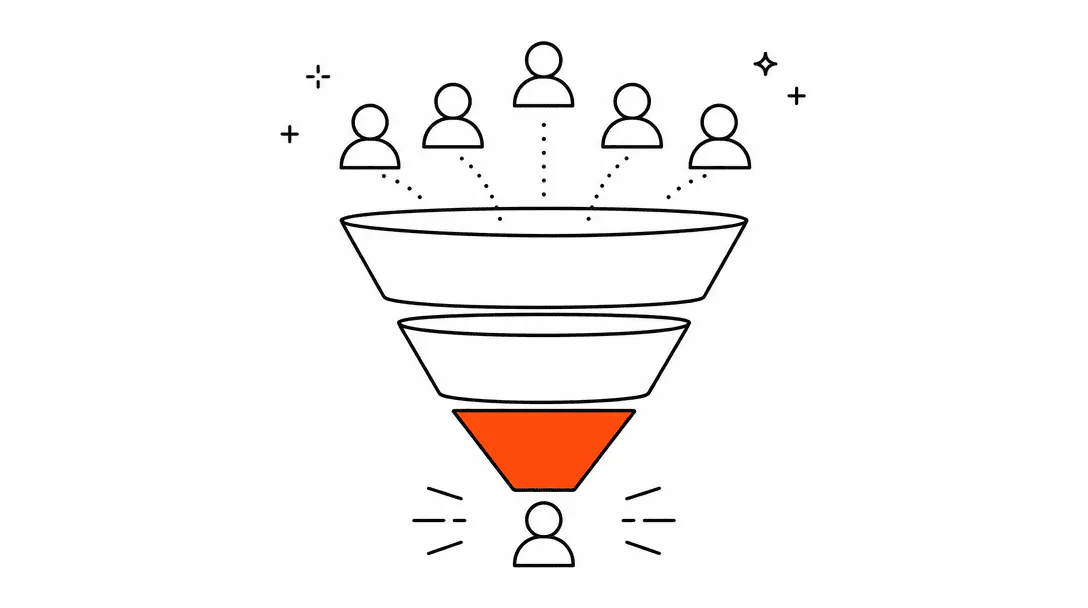
An AI lead qualifier is a conversational system that contacts every new inquiry automatically, asks a structured set of qualifying questions in natural language, scores what it hears, and routes the lead to the right next step before any human is involved. The result is that your team only touches leads that already meet your threshold, while everyone else goes into a nurture sequence or gets a polite close-out.
This post walks through the full loop: how the conversation works, how scoring is assigned, what the CRM hand-off looks like, and why a qualifier produces different outcomes than a static intake form. For context on where this fits inside a broader operating stack, see our piece on what an agentic system actually is.
Why does a contact form fall short?
A contact form collects fields and stops. Once a person submits, nothing happens until a human reads the inbox, decides whether to call, and finds time to do it. The qualification work still sits entirely on your team.
Abandonment is a separate problem: multi-field forms lose a significant share of people before they finish. Someone curious about your roofing service fills in their name, starts reading the dropdown options, and clicks away. A conversation keeps people engaged because it responds. Each question follows from the previous answer, so it feels like talking to someone instead of filling out paperwork.
There is also a timing gap. Speed of response matters more than most owners realize: research from InsideSales and MIT found that responding within five minutes beats a thirty-minute response by roughly 100 times on contact rate and 21 times on qualification rate. A static form cannot close that gap; a live qualifier can, because it replies the moment someone submits.
Average time before a business responds to an inbound lead inquiry, according to a widely-cited study of B2B response behavior.
What does an AI qualification conversation look like?
The qualifier opens with a warm acknowledgment and a single first question, then follows the person's answers with the next logical question. It is not a list of fields delivered in chat format; the path adapts based on what was said.
A typical qualification loop for a service business covers four areas, roughly in this order:
- Service type. What does the person actually need? This narrows the conversation immediately and determines which follow-up questions apply.
- Timeline. Are they looking to act this week, this month, or sometime in the future? Timeline is often the single most predictive variable for close probability.
- Budget range. Not an exact number, just a range. This protects both sides: the prospect understands what they're getting into, and your team isn't surprised on the call.
- Logistics. Location, property type, or other criteria specific to your service (square footage for an HVAC quote, roof pitch for a roofing company, number of locations for a commercial client).
The system is built around natural conversation, not interrogation. Questions are phrased the way a knowledgeable front-desk person would phrase them. If a prospect says "I'm not sure about the budget yet," the qualifier acknowledges that, moves to the next question, and notes the uncertainty in the score.
How does the AI decide who is a qualified lead?
Scoring is a weighted point total assigned after the conversation closes. Each answer category carries a weight, and the system adds up the score once it has enough data to make a routing decision.
Here is a simplified version of how weights typically look for a home-services company:
- Timeline: within 30 days = high score; beyond 90 days = low score
- Budget: within stated range = high score; no answer or far below minimum = low score
- Service match: fits your service area and scope = high score; outside service area = automatic disqualify
- Logistics match: property/project type you handle = high score; out of scope = route to partner referral or close
The thresholds are set during onboarding based on what your business actually closes. A company that closes well on longer timelines weights that differently than one that only wants this-week buyers. The point is that the scoring logic reflects your real criteria, not a generic template.
When we look at a client's CRM before onboarding, we almost always find three buckets: hot leads who booked, cold leads who ghosted, and a giant middle pile no one touched because the team couldn't tell which ones were worth calling. That middle pile is exactly what a qualifier is built for. It sorts the pile automatically and tells your team, with specifics, who to call first.
What happens after the lead is scored?
Routing is the output of scoring, and there are three standard paths:
High score: book now. The qualifier offers a booking link directly in the conversation. High-intent leads can get on the calendar without waiting for a callback. They came ready to act; the system lets them act immediately instead of making them wait.
Mid score: nurture sequence. These are people who are interested but not ready yet: timeline is 60 days out, budget is unclear, or they're still comparing options. They go into a follow-up sequence built around AI-driven text follow-up that re-engages them at the right intervals without requiring anyone on your team to remember to check in.
Low score or disqualify: courteous close. The person gets a genuine, helpful response. If there's a referral that makes sense, it's included. Either way, the record is created in your CRM with a score and notes, so nothing disappears. If they come back in six months, the system has context.
What does the CRM hand-off look like?
Before any human sees the lead, the AI has already written to the contact record. The hand-off includes: the lead score, a plain-English summary of what the person said, the answers to each qualifying question, the routing decision, and a suggested next step.
When your salesperson opens that contact, they are not starting from zero. They know the person is looking for a roof replacement after storm damage, has a $15,000-20,000 range in mind, wants to move within three weeks, and is in your service area. The call starts at a different point entirely.
This is where a qualifier does something an automation rule cannot replicate: it captures nuance. A rule can check a checkbox or look for a keyword. A qualifier can register that the person "seems flexible on budget but is firm on the timeline" and write that into the notes. The human picks up real context, not just a triggered tag.
Consider what happens to a service company that receives a surge of form submissions after a seasonal event. With one salesperson, they can only call a fraction of them before running out of time; the rest never hear back. A qualifier would have immediately sorted the pile by score, routed the highest-intent leads to a booking link before the team was even aware of them, moved the mid-range prospects into automated follow-up, and closed out the ones that were clearly out of scope. The salesperson would have spent calls on the leads who were genuinely ready, not whichever ones happened to be first on the list.
Does the qualifier handle after-hours inquiries?
This is one of the most practical arguments for building the system. Research from Invoca found that roughly 26% of inbound business calls go unanswered during business hours. After hours, the number is nearly everything. The qualifier runs the same loop at 11pm on a Saturday as it does at 10am on a Tuesday.
For service businesses where weather, damage, or urgency drives demand (roofing, HVAC, water mitigation, emergency plumbing), after-hours response is not a convenience: it is often the difference between winning or losing that job. A high-intent lead who submits at 9pm and gets a booking link in two minutes is far more likely to be on your calendar Monday morning than one who waits until a human reads the inbox.
The full picture of what this kind of coverage enables is covered in why service businesses lose leads, which goes into the specific gaps that let inquiries fall through.
What a qualifier is not
A lead qualifier is not a sales closer and should not be built as one. Its job is to sort, score, and route, then hand off. Trying to push a close inside the qualification conversation usually backfires: prospects who feel pressured early go cold, and your team inherits that friction.
It is also not a replacement for your sales process. A well-run call still wins on rapport, expertise, and fit. The qualifier just ensures that every call your team takes starts from a foundation of known intent and context, rather than cold outreach into an unsorted pile.
Lead qualification is the first link in the automation chain. Once a lead clears your threshold, the same infrastructure can book the appointment, send the onboarding sequence, and follow up if they go quiet. Our AI and automation services show how that full chain is built. For businesses that want more leads entering the funnel before qualification even begins, our visibility and local search services address the top-of-funnel gap. And if your website isn't converting visitors into inquiries effectively, conversion-focused web design is where that problem gets fixed.