
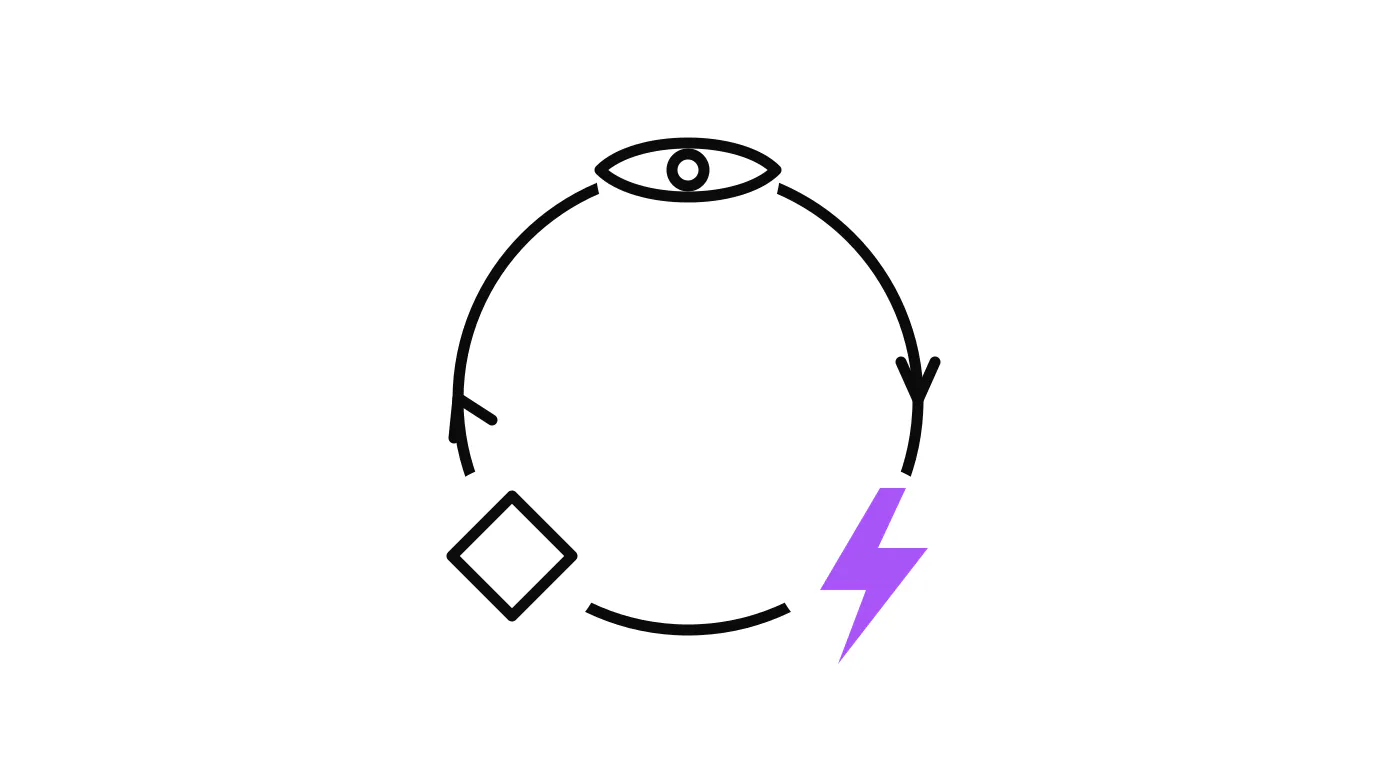
An agentic system is software that works toward an outcome on its own. You define what a good result looks like, and the system perceives what is happening, decides what to do next, acts, and repeats that loop until the goal is reached or it needs a human. It does not wait for someone to click the next button. It runs.
That definition matters more than the buzzword around it. For a local service business, an agentic system is what handles the jobs your front desk, follow-up coordinator, and after-hours answering service used to cover: the lead that comes in at 9pm on a Saturday, the inquiry that went unanswered until Tuesday, the prospect who replied once and then went quiet. The system takes those on without you being involved. What follows is a plain explanation of how it works, how it differs from the tools you already know, and where it fits in a real service operation.
What Is an Agentic System, in Plain English?
An agentic system is software that works toward a goal by running a perceive-decide-act loop on its own, without needing a human to direct each step. "Perceive" means it reads the situation: a new form submission, an unanswered phone call, a lead who stopped responding. "Decide" means it figures out the right next move: send a reply, ask a qualifying question, escalate to a person. "Act" means it does it.
That loop is what separates an agentic system from every other software category. A spreadsheet stores data. A form emails you when someone fills it out. A chatbot responds to what you type. An agentic system reads a situation and moves on it, then reads the next situation that follows, and keeps going. It has a goal, not a script.
How Is Agentic AI Different from a Conversational AI Tool?
A conversational AI tool answers questions you ask; an agentic system acts on goals you set. When you open a general-purpose AI assistant and type a question, it responds and waits for the next prompt. It does not monitor your inbox, reach out to your leads, or book appointments. It is a tool you use; it is not a system that runs.
An agentic system uses the same underlying AI models that power the AI tools you already use, but it wraps them in a loop connected to the real world. It can send texts, update records, check a calendar, place a phone call, or trigger another part of your operation. The AI is the brain inside a larger machine that has hands.
Think of it this way: a general-purpose AI assistant is a very sharp consultant who sits in a room and answers every question you put to them. An agentic system is an operator who has the same knowledge but also has a phone, a calendar, and the authority to act.
What Is the Difference Between a Chatbot, a Zapier Workflow, and an Agentic System?
A chatbot responds to messages, a Zapier workflow runs fixed steps on a trigger, and an agentic system reads the situation and chooses its own path.
- A chatbot is a conversational interface. It responds to messages using rules or AI. It waits to be spoken to and replies. Most chatbot widgets are good at answering common questions. They do not take actions outside the conversation.
- A Zapier workflow runs a fixed sequence of steps when a trigger fires. If form is submitted, then send an email, then add a row to a spreadsheet. It follows the same path every time, regardless of what is actually in the form or what has happened before. There is no judgment involved.
- An agentic system reads the situation, makes a decision based on what it finds, and takes a different path depending on what is true at that moment. It can use tools, check conditions, escalate when needed, and keep working across multiple steps and multiple days.
The practical difference: a Zapier workflow sends the same follow-up email to every lead regardless of what they said. An agentic system reads what the lead said, decides whether they are qualified, sends a different message to a serious prospect than to someone who clearly is not, and flags the edge cases for a human instead of guessing.
What Can an Agentic System Actually Do for My Business?
For a local service business, an agentic system handles the operations layer that sits between a lead arriving and a job being booked: it replies immediately, qualifies, follows up, books, and hands off.
Picture a roofing company in Stuart that runs storm-damage work. A lead comes in at 10:15pm on a Saturday after a bad squall moves through. A person on their team sees it Monday morning. By then, the homeowner has already booked with whoever called them back first.
With an agentic system, here is what happens instead:
- 10:15pm, Saturday: The inquiry lands. The system replies in seconds, by text or by a voice call to the number they provided, acknowledging the request and asking two qualifying questions about the damage and the address.
- 10:17pm: The homeowner answers. The system reads their reply, confirms the location is in the service area, checks for available slots, and offers two times for an estimate.
- 10:19pm: The homeowner picks a slot. The system books the appointment, sends a confirmation, and adds the job to the team's calendar.
- Sunday morning: The system sends a reminder. The lead shows up for the estimate.
No one on the team was awake. No one touched it. The system ran the loop, made the decisions it was built to make, and handed a confirmed appointment to the crew Monday morning.
That timing gap is the single biggest reason agentic systems matter for service businesses. On our own builds, a new inquiry gets a first reply in about 12 seconds. No one on the team touches it. The system reads the form, fires the reply, and the lead hears back before they have finished filling out the next competitor's form. The businesses winning on speed are not staffing a 24-hour front desk. They have built a system that runs the loop for them. We lay out the full picture on how fast you need to respond to a lead and the cost of getting it wrong.
Do I Need to Be Technical to Use an Agentic System?
No. Using it does not require any technical knowledge. Building one well does, because the decisions about what the system should do, when it should escalate, and how it should handle exceptions require careful thinking and real testing. That is the work of whoever sets it up, not the business owner using it.
Once it is running, interacting with it is no different from reading your messages or checking your calendar. The appointments are there. The follow-ups are logged. When a conversation needs you, it flags it. The technical complexity lives in the build, not in the daily operation.
What Tasks Can an Agentic System Handle Without Me Being Involved?
The tasks that an agentic system handles best are the ones that follow patterns but require judgment: qualifying an inquiry is different from answering a FAQ, and an agentic system can do both. Here is what it can reliably take on for a local service business:
- First reply to any new inquiry, within seconds, any hour of the day
- Qualifying questions to determine whether a lead fits your criteria
- Booking appointments directly into your calendar based on real availability
- Follow-up sequences for leads who did not book on the first contact
- After-hours phone coverage: answering questions, taking messages, booking slots
- Confirmation and reminder messages before appointments
- Routing conversations to a human when the situation calls for one
What it does not replace: the judgment call on a complicated job, the relationship with a long-standing client, or the conversation where someone needs a real person on the line. Those stay human. The agentic system handles the volume work so the humans can focus on the work that actually needs them.
91% of small businesses using generative AI report efficiency gains. The top applications are exactly the ones an agentic system covers: data analysis, content, and customer engagement including after-hours response.
What Happens When an Agentic System Makes a Mistake?
A well-built agentic system fails gracefully. The way to prevent bad outcomes is not to make the system infallible, it is to build clear escalation paths from day one: when the system hits a situation it cannot handle confidently, it routes the conversation to a human rather than improvising.
We have seen this in practice with our own systems. Our chat agent on lyfework.io is built to qualify leads and book strategy calls. A real visitor recently tried to book four times in a row using junk contact details. The system refused all four, without prompting, and redirected him to the self-serve booking page instead. That is not luck; that is what good escalation design looks like. The system knew its boundaries and stayed inside them.
The failure mode to watch for is a system built without those guardrails, one that guesses when it is confused and says something that does not reflect your business. That is a configuration problem, not an inherent flaw in the technology. Define the boundaries clearly before you launch, build in the handoff rules, and test the edge cases before real leads hit it.
Will an Agentic System Replace My Employees?
For a small service business, the honest answer is: it replaces the routine front-desk work, not the people doing meaningful work. If someone on your team spends two hours a day answering the same five questions, chasing leads who have not replied, and manually booking appointments, an agentic system takes that off their plate. Whether that frees them to do other things or changes your staffing is a business decision you make, not one the system makes for you.
What it does not touch: the technician running the job, the project manager making calls on a complicated build, the relationship with a client who has been with you for ten years. Agentic systems cover volume and repetition. They do not cover judgment, craft, or relationships that are built over time.
For most local service businesses with a small team, the real effect is that the work the system handles was either being done badly (slow replies, missed leads, inconsistent follow-up) or not being done at all. The system does it reliably. That is different from replacing someone.
Can an Agentic System Answer My Phones After Hours?
Yes. Our own phone line at Lyfework is answered by an AI voice agent around the clock. It answers common questions, takes messages, books appointments into our calendar, and warm-transfers callers to one of us when they specifically ask to speak with a person. The caller gets a real, conversational response at any hour, not a voicemail box and not a hold message.
For a local service business, after-hours phone coverage is often where the most leads are lost. The call comes in at 7pm when you are at dinner or 8am Sunday before anyone is at the office. A system that answers, qualifies, and books in that window recovers work that would otherwise go to whoever picks up first. We lay out the missed-call side of this in detail in how missed-call text-back works.
Can an Agentic System Qualify and Follow Up With Leads Automatically?
Yes, and this is where agentic systems return the most obvious value for local service businesses. The system replies to a new inquiry immediately, asks the questions you would ask: service needed, location, timeline, budget range. It reads the answers, decides whether the lead fits your criteria, and routes accordingly. A qualified lead gets a booking link or a direct calendar slot. A lead that is clearly out of scope gets a polite response and a redirect. A lead in a gray area gets flagged for a human to look at.
From there, if the lead does not book, the system follows up. Once the next day, then again a few days later, with a message calibrated to where they are in the conversation, not the same boilerplate twice. When they book, the follow-up stops. Read more on the follow-up side in how many times to follow up with a lead and in why service businesses lose leads.
We run this on our own leads. A new inquiry at Lyfework gets a first reply in about 12 seconds. The system asks two qualifying questions, checks availability, and either books directly or routes to us for a more complex conversation. The response time and the consistency are things a person cannot replicate across every lead, at every hour, without burning out.
Where Does an Agentic System Fit in a Local Service Business?
It fits in the operations layer between marketing and delivery. Your visibility work (your website, your Google Business Profile, your reviews) gets people to raise their hand. Your actual service is what delivers the result they hired you for. An agentic system handles the layer in between: it captures the hand-raise, qualifies it, converts it to a booked job, and prepares the handoff to whoever does the work.
That layer is where most local service businesses bleed. The lead comes in but does not get replied to for six hours. The follow-up never happens after the first contact. The after-hours call goes to voicemail and the homeowner books the next name on the list. None of those failures show up in an obvious place, but together they account for a lot of revenue that gets handed to a faster competitor.
Understanding where agentic systems sit in the broader visibility picture, alongside how customers find you and how AI search works, is covered in depth in SEO, AEO, and GEO explained. For a deeper look at what a full agentic build covers, start at our agentic systems overview or get started with a build conversation.
What Is the One-Paragraph Version of All This?
An agentic system is the operations layer that runs between a lead arriving and a job being booked. It perceives, decides, and acts in a loop, without waiting for a human to direct each step. For a local service business, that means first replies in seconds, qualified leads, booked appointments, and after-hours coverage, all running while you are on the job or asleep.
It is not magic and it is not a replacement for the skilled work your business actually does. It is a system that handles the volume and repetition reliably, so the work that genuinely needs a person gets one. Build it with clear rules, test the edge cases, and it runs the front of your house the way a sharp operator would.