
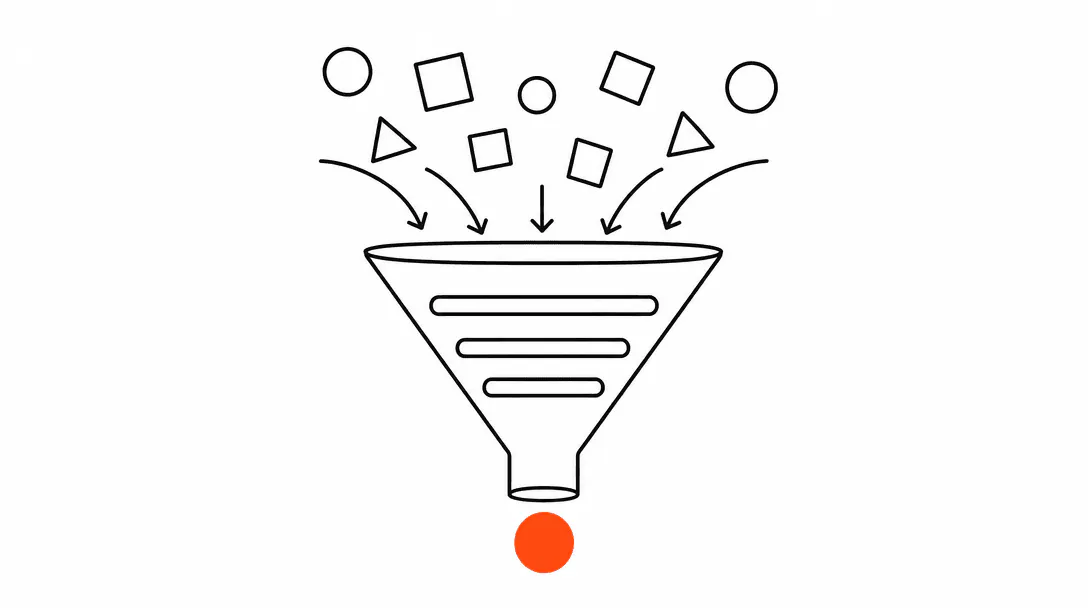
A lead qualification system answers one question before you commit any time: is this person a realistic buyer? Budget, timeline, and decision-making authority are the three signals that tell you. If you build intake questions around those signals and connect them to a pipeline that routes responses automatically, you stop dispatching salespeople to jobs you will never win.
This post is part of the conversion systems cluster on turning website visitors into paying customers. Qualification is the filter that makes everything downstream, from proposals to follow-up sequences, worth the effort. Lead qualification works best when paired with automated follow-up systems that route and respond to leads without manual oversight, and when the intake and booking flow is designed to collect the right signals upfront.
What does it actually mean to qualify a lead?
Qualifying a lead means confirming that the person has the budget, timeline, and authority to hire you before you invest time in a proposal or site visit. Generating a lead is one thing. Knowing which ones to pursue is the part most service businesses skip entirely.
A remodeling contractor we onboarded had a pattern that will be familiar: he was spending close to 30% of his week on in-person estimates for projects he knew, within the first ten minutes on site, he had no realistic chance of winning. The customer wanted a full kitchen renovation for a price that covered materials only. Or they were gathering quotes for a project that wouldn't start for 18 months and weren't ready to commit to anything. There was no filter before the site visit. Every lead went straight to the dispatch queue.
The fix wasn't faster follow-up or more sales training. It was a qualification step that ran before any human time got spent.
What are the three signals that determine whether a lead is worth pursuing?
Budget, timeline, and authority are the three qualification signals that matter for most service businesses. A lead that clears all three is worth a priority response. A lead that misses one needs a different follow-up path, not the same one as a ready buyer.
Budget signal. This doesn't mean asking for an exact number. It means asking for a range, or asking a question that reveals whether the person has a realistic sense of what the work costs. "What's your approximate budget for this project?" is blunt, and that's intentional. Someone who fills in a range that's in the right ballpark is a fundamentally different lead from someone who leaves it blank or writes "as low as possible." The field alone tells you something.
Timeline signal. "When are you hoping to have this completed?" separates people who are actively planning from people who are browsing. A lead who says "within the next 30 days" and a lead who says "sometime next year, just gathering ideas" require completely different levels of urgency in your response system. Treating them identically burns time on the one who isn't ready while the ready one waits.
Authority signal. "Are you the decision-maker for this project, or will others be involved in the final decision?" catches the situations where you spend two hours on a proposal that then goes to a spouse, a board, or a property manager who has different priorities entirely. It's not a disqualifier, but it changes how you structure your follow-up.
The average time businesses take to respond to an inbound lead, according to a Harvard Business Review study. Most leads have already moved on by then.
Response speed matters, but it matters most for the leads who were actually ready to buy. Qualification tells you which ones those are.
What is an Ideal Client Profile and how does it work as an operations filter?
An Ideal Client Profile (ICP) is a description of the type of customer who gets the most value from what you do and is the easiest for your business to serve well. Most people think of it as a marketing concept, something you write once for a brand deck and forget. Used as an operations filter, it's the standard your intake form is checking every lead against.
The ICP answers questions like: What's the typical project size we can actually execute at a profit? What geography do we serve without burning half a day in transit? What type of customer do we lose most often at the proposal stage, and why? Once those answers are written down, you can design intake questions that surface whether a new lead fits the profile or doesn't.
For a residential HVAC company, the ICP might be homeowners in a specific county, with systems over ten years old, needing replacement rather than repair. The intake form, then, asks for zip code, system age, and whether they're looking to replace or repair. Those three fields score the lead before anyone reads it. Leads outside the service area go into a different bucket. Leads wanting a $150 repair on a newer system get a lighter-touch response path than someone replacing a full system on a home they own.
This is what makes the ICP useful as an operations tool rather than just a description. It gives your intake form a target.
Which intake form questions actually surface qualification signals?
The best intake form questions are short, specific, and tell you something meaningful about fit. They are not generic contact forms with a "message" field that accepts anything.
When we build intake forms, we always include one question most clients initially push back on: "What's your approximate budget?" The concern is always the same: "Won't that scare people off?" In practice, the leads who skip the budget field are often the ones who argue about price on the call. The question doesn't lose good leads. It filters out the ones who were never a fit.
A working set of qualification questions for most service businesses looks like this:
- What type of project are you looking for help with? (a dropdown or multiple choice, not a text field, keeps answers consistent and sortable)
- What's your approximate budget range for this project? (offer ranges, not a blank field)
- When are you hoping to get started? (immediately / within 30 days / within 90 days / just exploring)
- Are you the decision-maker for this project? (yes / I'll need to discuss with someone else)
- What's your zip code or service area? (for geography-limited businesses)
Five fields. The whole form takes under two minutes. And by the time someone submits it, you have enough to score the lead without a phone call.
If your intake form is just name, email, and a message box, you are handing the qualification work to whoever answers the phone first, which means it happens inconsistently, late, and only after time has already been spent. An interactive quiz intake tool takes this even further, walking leads through a branching sequence that routes them based on their answers in real time.
How does pipeline routing separate high-score leads from low-score ones?
Pipeline routing means your CRM automatically places each lead into the right follow-up track based on how they answered your intake questions. High-signal leads go to a priority queue. Low-signal leads go to a lighter-touch sequence. Leads missing critical information get a short automated message asking for clarification before anyone on your team touches them.
The routing logic doesn't have to be complicated. A simple point-based approach works for most businesses:
- Budget within your typical range: +2 points
- Timeline within 30 days: +2 points
- Decision-maker: +1 point
- Service area match: +1 point
- Budget below your floor or left blank: 0 points (routes to low-priority)
- Timeline "just exploring": 0 points (routes to nurture sequence, not sales)
A lead that scores 5 or 6 gets an immediate notification to your top salesperson and a fast personal response. A lead that scores 2 gets added to an automated email nurture sequence and reviewed weekly. Neither path is waste. The first one is where you spend your energy now. The second one is where future business comes from, without anyone having to remember to follow up manually.
This connects directly to how outbound prospecting for service businesses works at a systems level: qualification isn't just an inbound problem. The same signals apply when you're reaching out cold. Budget, timeline, and authority determine whether an outbound conversation is worth pursuing the same way they filter inbound form submissions.
For the intake-to-pipeline connection to work, you need a CRM that can read form fields and trigger automations based on values. Most modern CRM platforms support this out of the box. The form submits, the field values map to contact properties, and a workflow fires based on the score. No one reviews every submission manually.
What happens to leads who don't qualify right now?
Unqualified leads are not lost leads. They are people who aren't ready yet. The right system keeps them warm without requiring your team to do anything manually.
A lead who fills out your form with a timeline of "just exploring" is telling you they're early in the process. That's useful information. Put them in a low-pressure email sequence that delivers genuinely helpful content over the next few weeks: a guide on what to look for in a contractor, a breakdown of what a project like theirs typically costs, a short case study (anonymized) of how someone similar to them worked through a decision. You're building trust without pitching.
When that person is ready to move, they'll come back. And they'll come back to you specifically, because you were the business that stayed in touch in a useful way while everyone else went silent.
A good landing page built to book service jobs should also do some of the qualification work before a lead even reaches your intake form. Clear, specific language about who you work with, what types of projects you take on, and what your service area covers means that some of the poor-fit leads self-select out before submitting. That's less work for the qualification system downstream.
What are the most common mistakes service businesses make when trying to qualify leads?
Three patterns come up repeatedly across the businesses we work with.
The first is no qualification at all. Every lead gets the same response, the same level of urgency, the same time investment. The result is that the team is always busy but doesn't always close. Effort and outcome don't connect cleanly because the effort is spread across leads that were never a real opportunity.
The second is qualification happening too late. A salesperson drives 40 minutes to a site visit and discovers in the first conversation that the budget is a fraction of the project cost, or that the person they're meeting with isn't authorized to sign anything. That's a qualification failure. The information existed, no one asked for it upfront.
The third is a qualification system that never connects to a pipeline. The intake form asks the right questions, but the answers sit in an email inbox and a human reads them when they get around to it. The whole point of collecting structured data is that a system can act on it automatically. If the data is in a form but the routing is manual, you haven't built a qualification system. You've built a slightly better contact form.
Across the intake forms we've built for clients in home services and professional services, the pattern is consistent: businesses that route leads by score see their sales teams spending more time on conversations that actually close, and less time on work that goes nowhere. The qualification step doesn't reduce the number of leads you pursue. It changes which ones you pursue first and how hard you go after each one.