
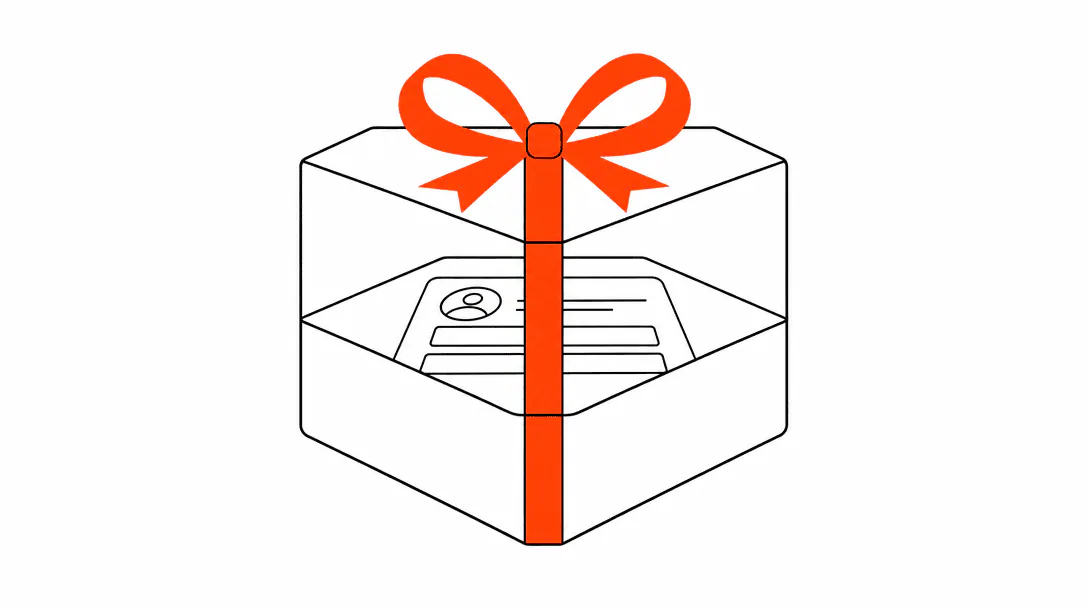
A lead magnet is something valuable you offer a website visitor in exchange for their contact information, typically a name, email, or phone number. The exchange is simple: they get something genuinely useful, you get permission to follow up. This post covers the five formats that see the most use, and which ones actually convert for service businesses.
This is part of a broader look at how to turn website visitors into customers. The lead magnet is one of the first pieces of that system, not the whole thing. Getting the format right matters a lot more than most business owners expect.
What is a lead magnet, exactly?
A lead magnet is a trade: you give something with real value, the visitor gives you a way to reach them. "Real value" is the part most businesses underestimate. A generic brochure is not a lead magnet. A checklist that tells an HVAC customer exactly what to look for before signing a maintenance contract is a lead magnet.
The format can be a PDF, a quiz, a calculator, an instant audit, a video, a guide, a template, or a tool. What ties all of them together is this: the visitor gets something specific enough to be useful on its own, and you get a contact to follow up with. Without both sides of that exchange working, you have either a freebie or a form, not a lead magnet.
For service businesses specifically, the goal is a warm contact: someone who has signaled intent. They are not ready to book yet (or they would have called), but they are researching. A well-built lead magnet captures them at that moment and gives you a reason to stay in the conversation.
What are the five most common lead magnet formats?
Five formats cover the vast majority of what service businesses actually deploy. Each has a different build cost, a different conversion rate, and a different lead quality profile.
1. PDF checklist or guide
The most common starting point. A checklist gives the visitor a concrete reference they can use right now: "10 questions to ask before hiring a roofer," "What to check before your HVAC seasonal service," "A home-seller's document prep list." Build time is low, distribution is simple, and many visitors are happy to trade an email for something they can save and reference.
The limitation is that a PDF is static. It gives the same answer to every person who downloads it, regardless of their actual situation. A plumber who operates in a market with high hard-water issues and a plumber in a brand-new development with newer pipes have very different customer needs, but your PDF cannot know which type of customer just downloaded it.
2. Interactive quiz
A quiz asks the visitor three to seven questions and delivers a personalized result based on their answers. For service businesses, the questions tend to be situational: How old is your home? What's your biggest concern right now? When did you last have this service done? The result is a score, a recommendation, or a next step.
Quizzes convert well because they feel lower-friction. Answering questions is easy and almost everyone is curious about their result. That curiosity is what drives people to enter their contact details to see the outcome.
3. ROI or cost calculator
A calculator lets the visitor plug in numbers and see an estimate. A pest control company might build one that estimates annual damage costs compared to a prevention plan. A financial advisor might show what a fee reduction means over ten years. The result is personalized to the visitor's own inputs, which makes it feel much more relevant than a generic guide.
Build complexity is moderate. The calculation logic needs to be reliable, and the inputs need to map to variables your customer actually knows (not internal industry terms). When the math is honest and the inputs are simple, calculators are among the highest-trust lead magnets for service businesses that deal with significant purchases.
4. Instant audit or assessment
An audit tool analyzes something specific and returns a finding immediately. A digital agency might audit a business's website speed score. A commercial cleaning company might run through a building safety checklist and return a risk level. A financial services firm might score a prospect's current insurance coverage against common gaps.
Audits work particularly well when the result reveals a real problem the visitor did not know they had. That discovery creates urgency, which shortens the path from "interested" to "ready to talk."
5. Practical guide or mini-course
Longer-form content: a structured walkthrough of a topic the visitor cares about. A law firm might offer a plain-language guide to estate planning basics. An HVAC company might publish a homeowner's guide to understanding their system before winter. These build authority and trust over time, but they also have the longest delay between "download" and "ready to buy."
Guides are the right format when you are building for the long game and your sales cycle is naturally longer (think legal, financial planning, large construction projects). They struggle in markets where buyers decide fast and the intent behind the search is already high.
Why do quizzes and interactive tools outperform static PDFs for service businesses?
Interactive tools convert at roughly 40 to 50 percent of visitors who start them. Static PDFs typically convert at 20 to 25 percent. That gap exists for a specific reason: personalization.
Typical opt-in rate for interactive quiz tools, compared to 20–25% for static PDF lead magnets.
Service businesses rarely serve a homogeneous customer. A roofing company gets calls from homeowners dealing with a slow leak, commercial property managers running maintenance budgets, and real estate agents trying to close a sale before inspection findings kill the deal. Those three people need completely different information. A single PDF guide cannot address all three situations without becoming so broad that it is useful to none of them.
A quiz can ask "Are you a homeowner, a property manager, or preparing for a sale?" and deliver a different result to each. That specificity is what makes the visitor feel like the tool was built for them. And when something feels built for you, you are much more likely to leave your phone number.
Beyond conversion rate, interactive tools give you something a PDF never can: signal. When we built the Lyfework quiz funnel, the question that moved the conversion needle most was a single qualifying question that sorted leads by urgency, not demographics. That one field change routed high-heat leads directly to a calendar and cooler leads to a nurture sequence. The tool became a qualification layer, not just a capture form. We could see, before a single phone call, which leads were ready to move and which ones needed time.
That kind of signal is only possible when the lead magnet is interactive. A PDF download tells you someone wanted the file. A quiz tells you where that person is in their decision process.
How do you match the right format to your type of service business?
The right format depends on two things: how complex is the customer's decision, and how fast do they typically move from "interested" to "ready to buy?"
High urgency, clear problem: Trades businesses (plumbing, HVAC, roofing, electrical) often deal with customers who already know something is wrong. An instant audit or a short quiz that produces an urgency score tends to work well here. The visitor is already motivated. You just need a tool that captures them and confirms the problem is real.
Higher-consideration purchase: Financial services, legal, construction project management, and commercial services involve longer sales cycles and more comparison shopping. A guide or calculator gives the prospect something to think with during that process. You are staying present across a longer window rather than trying to close in a single visit.
Wellness and personal services: Med spas, salons, fitness, and similar businesses do well with quizzes that feel like recommendations. "Find the right treatment for your skin type" or "What's your fitness starting point?" are quiz formats that match how people already think about those services. The quiz feels like a service, not a form.
A good example of what happens when format and business type do not align: we have worked with businesses in professional services who built a 12-page PDF guide that attracted a respectable number of downloads but generated almost no inbound calls. The PDF was well-written. The problem was structural: the guide never asked for any qualifying information, never asked about urgency, and never connected to any follow-up sequence. The download was the end of the relationship. A quiz covering the same material would have created a two-way conversation from the first interaction.
How does a lead magnet connect to your actual sales process?
A lead magnet that does not connect to your follow-up system is just a list-builder, and lists without sequences do not close business. The connection matters as much as the conversion rate.
For interactive quiz tools built for service businesses, the flow looks like this: a visitor takes the quiz, answers the qualifying questions, and gets a result. Behind the scenes, their answers score them against urgency and fit criteria. High-urgency leads get routed to a booking page. Lower-urgency leads enter a nurture sequence (email, SMS, or both) that continues the conversation over a few days or weeks. The whole thing runs without someone manually sorting a spreadsheet.
The follow-up piece is where most lead magnets break down. The tool captures someone, then the business sends one generic email and moves on. Research on lead response puts the average inbound follow-up time at 42 hours, with roughly 23 percent of leads never receiving any follow-up contact at all. (Harvard Business Review, 2011.) If the lead magnet connects to an automated nurture sequence, that stat becomes someone else's problem.
Average time businesses take to respond to an inbound lead. Nearly 1 in 4 never respond at all.
The best lead magnets also inform the first real conversation. If a prospect took your quiz and told you they are dealing with a problem that has been going on for three months and they have two other vendors quoting them, your first follow-up call should reference that. Not in a surveillance way, but in the way any competent consultant would: "I saw you mentioned you're comparing a few options right now. Here's what I'd focus on when you're reviewing those quotes." That specificity is only possible when the lead magnet is built to share data with your CRM, not just collect emails into a spreadsheet. See also: how many times to follow up with a lead.
What mistakes do service businesses make with lead magnets?
Three patterns show up on almost every audit we run.
Building the tool, skipping the routing. The lead magnet captures contacts. Those contacts go into an email list. Someone eventually sends a broadcast. That is not a sales system, it is a newsletter. The fix is a structured follow-up sequence that starts within minutes of the opt-in, not the next newsletter send date. The way high-converting landing pages book jobs uses the same principle: speed and specificity beat polish.
Choosing format based on what is easy to build, not what converts. A PDF is fast to create. That is a real advantage during early testing. But if you are keeping a PDF as your primary lead magnet because it was easy to build three years ago and you have never tested anything else, you are leaving a significant gap. Interactive tools take more time to build initially, and they compound their advantage over time because they learn what your highest-quality leads look like.
Offering something generic when the business is specific. "Download our free guide to home improvement" is not a lead magnet, it is a category. "The 7-point walkthrough we use before every roof inspection in this area" is a lead magnet. The specificity signals expertise. Generic freebies attract generic leads; specific tools attract people who already have the specific problem you solve.
What is the simplest way to start?
Start with a checklist or a short quiz, not a calculator. Calculators require real accuracy and careful input design to be trustworthy. Guides take time to write well. A five-question quiz or a one-page checklist can be live in a week and will tell you more about your audience in the first 30 days than you would learn from six months of analytics alone.
Pick one problem your best customers share before they buy from you. That is your topic. Design the lead magnet around showing competence in that specific area. Connect it directly to your follow-up sequence from day one, even if that sequence is just three emails over seven days. Test the result. Then build from there. Lead magnets are part of the broader Booking Systems system, the infrastructure that turns site visitors into identified leads before they leave. Once captured, your automation layer handles the follow-up so no lead sits untouched waiting for someone to remember to call.